
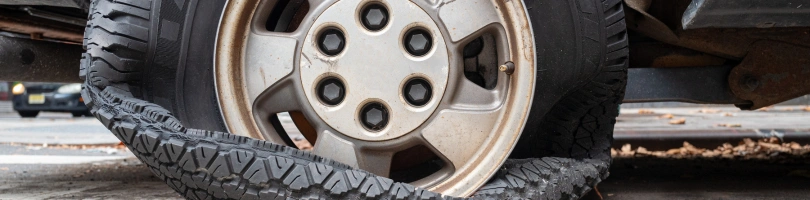
Charlotte Truck Tire Blowout Attorney
Legally Reviewed by the Stewart Law Offices Content Team: Sep 19, 2026
A tractor-trailer tire blowout can happen in an instant on I-85, I-77, or I-485 around Charlotte, and when it does, the results are often catastrophic. A fully loaded commercial truck can weigh up to 80,000 pounds, and when one of its tires fails at highway speed, the driver can lose control within seconds. Nearby passenger vehicles bear the consequences through no fault of their own. If you or someone in your family was hurt in a crash caused by a truck tire blowout in Charlotte, North Carolina, Stewart Law Offices is ready to fight for the full compensation you deserve.
 Our legal team includes Elizabeth VonCannon, a licensed member of the North Carolina State Bar with more than six years of dedicated experience handling serious truck accident and personal injury cases. Elizabeth brings a thorough, detail-oriented approach to every case she takes on, working closely with clients across Charlotte and throughout Mecklenburg County to ensure they fully understand their rights and receive the personal attention their situation demands. When you work with our team, you are not passed to a call center; you speak with your attorney directly and receive consistent, honest communication from start to finish.
We handle tractor-trailer accident cases on a contingency-fee basis, which means there are no upfront legal fees and no costs to you unless and until we win.
Truck Tire Blowouts On Charlotte’s Roads
Charlotte sits at the intersection of several major commercial freight corridors. Interstate 85 connects Atlanta to Charlotte and continues north toward Greensboro and beyond, carrying a constant flow of tractor-trailers through Mecklenburg County around the clock. Interstate 77 brings heavy truck traffic from Columbia to the south and from the Virginia line to the north. The I-485 outer loop circles the metro and channels commercial vehicles around the city’s perimeter. Together, these corridors create a high-volume truck traffic environment where tire failures are not hypothetical; they occur regularly, and the consequences for passenger vehicle occupants are severe.
Tire failure is one of the known contributing factors in this ongoing toll. NHTSA estimates that, based on its latest data, 511 people died in tire‑related crashes in 2024. Only 19% of drivers properly inflate their tires, even though properly inflated tires can extend tire life by about 4,700 miles and save up to 11 cents per gallon on fuel.
Closer to home, North Carolina recorded approximately 150 fatal truck and bus crashes annually in recent years, resulting in close to 170 fatalities per year and more than 2,500 truck-related injuries statewide each year. In 2023, North Carolina’s total large truck crash count dropped to 6,879 incidents, down from 7,250 to 7,500 in prior years, but fatal crash numbers remained stubbornly consistent.
What Happens When A Tractor-Trailer Tire Blows Out
Understanding the mechanics of a truck tire blowout explains why these events often cause catastrophic crashes. Commercial truck tires endure constant strain, supporting up to 80,000 pounds, absorbing heat from long highway travel, and resisting friction over thousands of miles. When structural integrity fails, the rupture is sudden and violent. The driver immediately loses control, and depending on speed and which tire fails, the truck may veer sharply, leading to overcorrection and lane drift. Cargo can shift as the center of gravity changes, raising rollover risks.
In severe cases, the cab folds toward the trailer, producing a jackknife that blocks entire interstates. Shredded tires may also launch debris at high velocity, striking nearby vehicles and causing secondary crashes. These chain‑reaction events make blowouts among the most dangerous and complex trucking accidents on North Carolina roads.
Common Causes Of Tractor-Trailer Tire Blowouts In Charlotte
A tire blowout on a commercial truck rarely happens without a contributing cause that someone was responsible for preventing. Our Charlotte truck tire blowout attorneys investigate every aspect of what led up to the failure.
Neglected Tire Maintenance
Federal Motor Carrier Safety Administration regulations require commercial truck drivers to conduct pre-trip and post-trip inspections of their vehicles, including a thorough check of all tires. When drivers skip these inspections or report them falsely, tires with visible wear, cracking, or low pressure continue to operate on public highways until they fail. Poor truck maintenance practices at the carrier level compound the problem further when scheduled maintenance appointments are missed or tire replacements are deferred to cut costs.
Improper Tire Inflation
Tire pressure outside the manufacturer’s range creates a serious blowout risk. Underinflation forces the sidewall to flex excessively, generating heat that weakens the rubber and internal structure. Overinflation makes the sidewall rigid and prone to rupture when striking potholes, joints, or debris. Both conditions are unacceptable for commercial vehicles. Routine inspection and proper inflation are essential, since either extreme can turn a truck tire into a sudden hazard capable of causing catastrophic accidents.
Overloaded Cargo
When a trailer is loaded beyond the weight limits set by federal law or beyond the load rating of the tires themselves, the structural capacity of those tires is exceeded from the moment the truck pulls out of the distribution center. The result is accelerated wear and a substantially elevated risk of catastrophic failure during the journey. Overloaded cargo is a problem our attorneys encounter in cargo truck accident investigations, and it implicates not only the carrier but also the shipper.
Excessive Speed
High speeds generate friction, which generates heat, which accelerates tire degradation. A truck operating consistently above its tires’ speed rating, particularly during summer months on the hot asphalt surfaces of I-85 and I-77 through Charlotte, is at elevated risk of a heat-induced blowout. Speeding accidents involving commercial trucks are among the most severe personal injury cases our attorneys handle, and when speed contributed to a tire failure, it is a critical element of establishing the driver’s and carrier’s negligence.
Defective Tires
Not every blowout stems from poor inspection or deferred maintenance. In some cases, the tire itself is defective at manufacture, with flaws in construction, materials, or design that make failure inevitable despite proper care. When a defect contributes to a crash, the manufacturer may be liable under North Carolina product liability law. Identifying such defects requires expert analysis of the failed tire, which is why preserving physical evidence after a blowout is critical.
Improperly Installed Tires
A tire installed by an unqualified technician or incorrectly, such as one mounted with improper torque on the lug nuts or seated incorrectly on the rim, creates a risk of failure that no subsequent inspection can fully detect. When a maintenance contractor performed the tire installation, that contractor may share liability for the resulting crash alongside the trucking company.
Road Hazards And Infrastructure Defects
Potholes, raised pavement edges, and road debris can trigger a blowout even in a properly maintained tire. When a government entity’s failure to maintain a section of roadway in adequate condition contributed to a tire failure on a Charlotte-area highway, that entity may bear partial responsibility for the resulting crash. These claims involve specific procedural requirements distinct from standard personal injury cases.
Who Can Be Held Liable For A Tractor-Trailer Tire Blowout
One feature that distinguishes tractor‑trailer blowout cases from standard car accident claims is the number of parties who may share legal responsibility for the crash. Our Charlotte truck tire blowout attorney team investigates all of them to ensure victims pursue every available source of compensation.
The following parties may be held accountable:
- The truck driver for inadequate pre‑trip tire inspection, fatigued driving that missed warning signs, or unsafe operation that contributed to the blowout
- The trucking company under federal regulations for maintaining its fleet, training and supervising drivers on inspection requirements, and establishing FMCSA‑compliant maintenance schedules
- Third‑party maintenance contractors, when negligent installation, inspection, or repair work contributed to tire failure
- The tire manufacturer under product liability law if a defect in design or construction caused the blowout, independent of maintenance issues
- Cargo shippers or loaders, when overloading the trailer, created excessive stress leading to tire failure
Each of these entities may share liability depending on the evidence uncovered during the investigation.
The Federal Regulations That Govern Truck Tire Safety
Commercial trucking is one of the most heavily regulated industries in the country, and tire maintenance is a specific area of federal oversight. The FMCSA’s Federal Motor Carrier Safety Regulations at 49 C.F.R. § 393.75 establish specific requirements for commercial truck tires, including minimum tread depth standards, prohibition on operation with flat tires or tires with exposed fabric, requirements for matching tires on the same axle, and load and inflation requirements.
When a carrier or driver violates any of these regulations and a blowout occurs, that regulatory violation is powerful evidence of negligence. In North Carolina civil litigation, a statutory or regulatory violation may constitute negligence per se, meaning the violation itself establishes the breach-of-duty element of a negligence claim without requiring further proof that the conduct was unreasonable.
FMCSA also imposes hours-of-service limits on commercial truck drivers under 49 C.F.R. § 395.3 to prevent fatigued driving, which contributes to inadequate pre-trip inspections and to diminished driver response when a tire failure occurs mid-journey.
Filing A Claim After Sustaining Injuries In A Charlotte Tire Blowout Truck Accident
When a tire fails on a loaded semi, the truck can jackknife, roll over, or shed debris that triggers multi-vehicle chain reactions. Victims often suffer broken bones, traumatic brain injuries, spinal cord damage, or internal organ trauma that requires extensive medical care and long-term rehabilitation.
North Carolina applies the pure contributory negligence doctrine, which is one of the most defendant-favorable fault rules in the country. Under this standard, an injured person who is found to have contributed even one percent to causing the accident may be completely barred from recovering any damages at all. Insurance companies for trucking carriers are well aware of this rule and will look for any opportunity to argue that the injured driver or passenger shares some degree of fault.
North Carolina gives most personal injury victims three years from the date of the crash to file a lawsuit against the at-fault parties, under N.C. Gen. Stat. § 1-52.
Trucking companies aggressively defend against claims and attempt to shift blame to accident victims. Insurance adjusters conduct their own investigations and build defensive theories. Your Charlotte truck accident attorney must move quickly to secure evidence, interview witnesses, and develop a compelling case theory before opposing parties limit access to critical information.
Visit Our Truck Tire Blowout Accident Attorneys in Charlotte, NC
Getting Justice for Your Injuries
Truck tire blowouts can cause catastrophic consequences, devastating lives and families. You deserve experienced legal representation fighting for full compensation covering all your losses. Call Stewart Law Offices at (704) 521-5000 or contact us online to schedule your free consultation with Elizabeth Von Cannon today. We represent truck accident victims on contingency, meaning no upfront costs and no attorney fees unless we secure compensation for you.
Frequently Asked Questions About Truck Tire Blowout Accidents in Charlotte, NC
The trucking company bears primary responsibility for truck tire blowout accidents in Charlotte, NC, because it must maintain all vehicles in safe operating condition through regular inspections and timely tire replacement. Tire manufacturers may share responsibility if defective products caused the blowout. Maintenance facilities bear liability for negligent tire service. Your attorney investigates all potentially responsible parties to maximize compensation available from multiple sources in Charlotte. The damaged truck itself provides critical evidence of tire failure patterns and maintenance conditions. Maintenance records documenting tire replacements and inspections prove whether the trucking company followed safety protocols. Electronic log data shows vehicle speed and driver actions at the moment of failure. Accident reconstruction expert analysis explains how the blowout caused the accident. Eyewitness testimony corroborates the sequence of events in the Charlotte, NC, accident. Compensation for truck tire blowout injuries in Charlotte, NC, varies based on injury severity, medical costs, lost wages, permanent disabilities, and impact on quality of life. Catastrophic injuries from truck accidents routinely result in settlements and verdicts exceeding one million dollars. Your attorney calculates all economic and non-economic damages to demand fair compensation reflecting the full financial and personal impact of your injuries in Charlotte.