
Charlotte Construction Truck Accident Lawyer
Legally Reviewed by the Stewart Law Offices Content Team: Sep 19, 2026
Charlotte is one of the most actively developed cities in the Southeast, and with that growth comes a constant presence of construction trucks on its roads. Dump trucks hauling fill dirt on I-77, cement mixers navigating the narrow intersections near uptown, and flatbeds carrying steel through the interchange at I-277 and Billy Graham Parkway all share lanes with ordinary drivers who have no warning of the risks that lie ahead. When a construction truck crash happens, the consequences are rarely minor. These are massive, heavily loaded vehicles, and the people in smaller cars bear the full weight of the impact. If you or a family member has been seriously hurt in a collision with a construction vehicle anywhere in the Charlotte area, Stewart Law Offices is prepared to help you pursue full and fair compensation for everything you have lost.
 Our legal team includes Elizabeth VonCannon, a North Carolina State Bar licensed attorney who has spent more than six years representing people injured in serious truck crashes throughout Mecklenburg County and across the region. Elizabeth brings focused preparation, genuine personal attention, and thorough knowledge of both North Carolina law and federal trucking regulations to every case she handles. You will speak with her directly, you will always know where your case stands, and you will have a dedicated advocate in your corner from the first consultation to the final resolution. At Stewart Law Offices, every client receives the individual care that a serious injury demands.
All Charlotte construction truck accident cases are handled on a contingency-fee basis. There is no cost to you unless and until we recover compensation on your behalf.
Types Of Construction Trucks Involved In Charlotte Crashes
In 2023, 5,472 people were killed in traffic crashes involving large trucks nationally, a figure that represents an 8 percent decrease from 2022 but remains more than 30 percent higher than a decade earlier. In 2023, over 898 people were killed in work zone crashes nationally, and an estimated 101,000 work zone crashes produced more than 40,000 injuries that same year. Not all construction vehicles present the same risks. Understanding which type of truck was involved in your crash matters both for establishing liability and for documenting the severity of the forces involved.
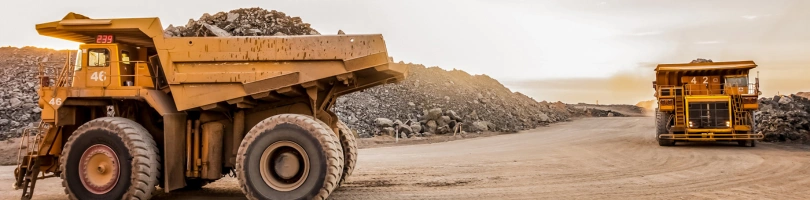
Dump Trucks
Dump trucks are among the most frequently seen construction vehicles on Charlotte’s roads. They haul materials between job sites and disposal locations, and their routes often take them onto highways and surface streets where they share space with passenger cars at high speeds. When a dump truck is fully loaded, it can weigh 30 tons or more. A sudden stop, a sharp turn, or unsecured cargo can each trigger a catastrophic crash. Dump trucks also pose significant blind-spot accident risks because their large bodies obstruct the driver’s field of view, making smaller vehicles essentially invisible until it is too late.
Cement Mixers
Concrete mixer trucks carry a rotating drum that shifts the truck’s center of gravity as the load moves. This makes them particularly prone to rollovers, especially on curved ramps like those at the I-277 interchange and on the elevated sections of I-277 through uptown Charlotte. A rollover involving a loaded cement mixer can block multiple lanes and produce catastrophic injuries to anyone in its path.
Flatbed Trucks And Overloaded Cargo Vehicles
Flatbed trucks carrying construction materials, including steel beams, lumber, pipe, and prefabricated building components, present serious hazards when cargo is not properly secured. An overloaded cargo truck or a flatbed with improperly restrained loads can shed debris onto the highway at speed, strike adjacent vehicles during sudden maneuvers, or cause a tire blowout that leads to a multi-vehicle collision. Federal regulations under 49 C.F.R. Parts 393 and 395 impose specific requirements on cargo securement and weight limits for commercial vehicles.
Crane Trucks And Extended-Load Vehicles
Mobile crane trucks and vehicles carrying oversized loads require route permits, escort vehicles, and specialized operations on public roads. When a crane truck swings its boom into traffic, extends into an adjacent lane during a turn, or travels without a proper escort, the results can be devastating. These accidents raise complex questions about permitting, routing compliance, and operator certification.
What Makes Construction Truck Accident Cases Complicated
A construction truck accident claim involves layers of legal complexity that a standard car accident case does not. Multiple parties may share responsibility, a different body of law governs commercial vehicle operations, and the evidence needed to prove your case must be secured quickly before it is lost or altered.
Identifying Every Responsible Party
Liability in a Charlotte construction truck accident rarely rests solely with the driver. Depending on the facts, responsible parties may include the truck driver, the construction company that owns or operates the vehicle, the general contractor overseeing the project, a subcontractor who directed the truck’s movements, a third-party maintenance provider responsible for vehicle upkeep, or a cargo company that loaded the truck improperly. Our Charlotte construction truck accident lawyer begins identifying all potentially liable parties from the moment you hire us, ensuring that no responsible party is overlooked when we build and present your claim.
Federal Motor Carrier Safety Regulations
Commercial construction trucks operating on public roads are governed by the Federal Motor Carrier Safety Administration’s regulations, found at 49 C.F.R. Parts 390 through 399. These rules cover driver qualification and licensing, hours-of-service limits designed to prevent fatigued truck driving, vehicle inspection requirements, cargo securement standards, and mandatory drug and alcohol testing. When a driver or company violates these regulations and a crash results, those violations can serve as powerful evidence of negligence.
Mechanical Defects And Maintenance Failures
Construction trucks operate under extreme conditions and require rigorous, documented maintenance programs. Brake failures, tire blowouts, steering defects, and hydraulic system malfunctions are all well-documented causes of construction truck crashes. A mechanical defect caused by a manufacturer’s design flaw may give rise to a product liability claim, while a defect caused by deferred or negligent truck maintenance may expose the operating company to liability. Our Charlotte construction truck accident attorneys secure maintenance logs, inspection records, and service histories in every construction truck crash investigation.
Evidence That Must Be Preserved Immediately
Critical evidence in a construction truck crash begins disappearing within hours of the collision. Electronic logging device data and black-box records are typically overwritten on a rolling basis. Surveillance footage from nearby businesses and traffic cameras is deleted within 24 to 72 hours. Witnesses to the crash become harder to locate. The vehicle’s physical condition may be altered during repairs. Stewart Law Offices acts immediately by sending preservation demand letters, retaining accident reconstruction experts, and securing every piece of evidence before it is gone.
What Compensation Can You Pursue After A Construction Truck Crash In Charlotte
North Carolina law allows injured crash victims to seek full compensation for all losses caused by the responsible party’s negligence. Your recovery may include:
- Current and future medical expenses, covering emergency treatment, hospitalization, surgeries, rehabilitation, physical and occupational therapy, prescription medications, and all anticipated future care costs for ongoing or permanent conditions.
- Lost wages and reduced earning capacity, including the income you have already lost during recovery and the projected reduction in future earnings if your injuries affect your ability to work in your prior capacity or return to your field.
- Property damage, covering the cost to repair or replace your vehicle and any other personal property destroyed in the crash.
- Pain and suffering, representing the physical discomfort and emotional distress you have experienced and will continue to experience as a result of your injuries.
- Loss of enjoyment of life, recognizing that serious injuries affect your ability to engage in the activities, hobbies, and relationships that gave your life meaning before the crash.
Punitive damages, which are available in North Carolina under N.C. Gen. Stat. § 1D-15 when a defendant’s conduct was willful, wanton, or recklessly indifferent to the safety of others. Trucking companies that knowingly allow fatigued drivers to operate, ignore required vehicle inspections, or falsify records may face punitive damages exposure in addition to compensatory liability.
The Deadline To File Your Claim In Charlotte, NC
North Carolina’s personal injury statute of limitations gives most crash victims three years from the date of the collision to file a lawsuit against the responsible parties. In wrongful death cases, the two-year period runs from the date of death. While three years may seem adequate, the reality is that the most critical work in a construction truck case occurs in the days and weeks immediately following the crash.
Evidence windows close quickly. We encourage you to contact our office as soon as possible after your injury so we can begin protecting your case from the moment we are retained.
Visit Our Construction Truck Accident Attorneys in Charlotte, NC
Contact A Charlotte Construction Truck Accident Lawyer Today
If you or a family member has been seriously injured in a construction truck crash anywhere in Charlotte, whether on I-77, I-277, Independence Boulevard, or any of the work zones that stretch across this growing city, Stewart Law Offices is ready to help.
Our Charlotte truck accident attorneys thoroughly investigate construction site records, driver logs, and vehicle maintenance reports to determine liability. We represent victims in negotiations and court proceedings, ensuring negligent companies and contractors are held accountable.
Frequently Asked Questions About Charlotte Construction Truck Accidents In Charlotte
Essential evidence for construction truck accident lawsuits in Charlotte, NC includes police reports, witness statements, photographs of vehicle damage and the accident scene, surveillance footage from nearby businesses, medical records documenting injuries, medical expert testimony about injury causation, expert analysis of truck operations and Federal Motor Carrier Safety violations, evidence of prior truck accidents suggesting pattern negligence, and maintenance records showing vehicle condition. Your Charlotte construction truck accident attorney systematically obtains this evidence to build a compelling case proving liability and establishing a fair compensation value.
Yes, you can pursue claims against construction companies in Charlotte whose trucks cause accidents due to negligence or violations of federal safety regulations. Construction companies are responsible for employee and subcontractor conduct under various legal theories. Your Charlotte truck accident attorney identifies which construction entity operated the truck and files claims against their liability insurance coverage. Multiple defendants may be sued simultaneously to ensure maximum compensation from all available sources.
Yes, construction site operators in Charlotte, NC bear responsibility for accidents involving trucks operating on their sites under various legal theories, including negligent supervision, failure to enforce safety protocols, inadequate site maintenance, and vicarious liability for employee or subcontractor negligence. Your Charlotte construction truck accident lawyer examines the construction site’s safety record, operator training practices, and equipment maintenance procedures to establish liability and pursue compensation from the site operator’s insurance coverage in addition to truck driver and trucking company claims.