
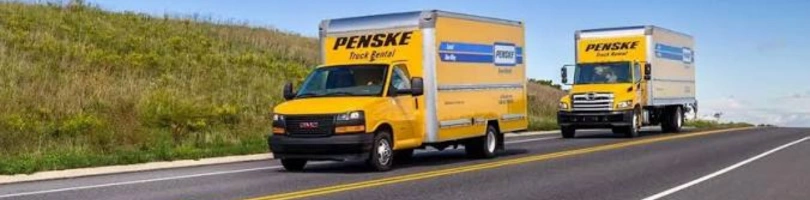
Charlotte Penske Truck Accident Lawyer
Legally Reviewed by the Stewart Law Offices Content Team: Sep 19, 2026
Penske moving trucks are a common sight on Charlotte streets and highways. Every day, people rent them for relocations, businesses use them for deliveries, and contractors use them for job-site work. When a collision involving one of these substantial vehicles occurs, the consequences can be catastrophic. Unlike passenger cars, Penske trucks weigh significantly more and require specialized handling. Injuries from Penske truck accidents in Charlotte often involve severe trauma that demands aggressive legal representation.
 Stewart Law Offices represents injured victims throughout Charlotte and Mecklenburg County. Our legal team includes Elizabeth Von Cannon, a North Carolina State Bar-licensed attorney with six years of dedicated experience defending people harmed in serious truck collisions. Elizabeth and our firm approach every Penske truck accident case with meticulous attention to detail and unwavering commitment to securing maximum compensation for our clients.
We understand that these cases require specialized knowledge of trucking regulations, insurance tactics, and damage calculation strategies that go far beyond standard auto accident claims.
Why Penske Truck Accidents Present Unique Legal Challenges
Penske Truck Leasing was founded in 1969 and has grown into one of the largest commercial trucking and rental operations in North America. Today, Penske operates and maintains a fleet of approximately 433,000 vehicles and serves customers from nearly 1,000 maintenance facilities and more than 2,400 rental locations across the continent. Not all truck accidents are legally equivalent, and a Charlotte Penske truck accident case raises specific issues that distinguish it from a crash involving a traditional commercial carrier.
The Renter or Lessee As The Operator
In many Penske accidents, the driver is someone who rented the truck for a residential move or a short-term project. That person likely has no training in operating a large vehicle, no experience managing the handling characteristics of a truck that may weigh tens of thousands of pounds when loaded, and no familiarity with the stopping distances required to bring such a vehicle safely to rest at highway speeds. When that inexperienced driver causes a crash, their liability is generally clear, but the limits of their personal auto insurance or the rental coverage may not be sufficient to compensate a seriously injured victim.
Corporate Operators And Leased Fleets
Penske also leases vehicles to businesses that operate them as part of commercial fleets. When a crash involves a Penske truck operated by a business lessee, the analysis of liability expands to include the lessee-company, the driver, and potentially Penske itself if a vehicle defect or maintenance failure contributed to the accident. Federal motor carrier regulations govern leased commercial vehicles, and compliance failures at any level of the chain can create liability.
Penske’s Own Potential Responsibility
Penske is a sophisticated commercial entity with obligations to ensure its vehicles are roadworthy before they are placed into service. Under certain circumstances, including where a vehicle defect, a mechanical defect such as brake failure or tire malfunction, or a failure in Penske’s truck maintenance program contributed to the crash, Penske itself may share in the liability for your injuries. Our attorneys investigate these questions as a standard part of every Penske crash investigation.
Common Causes Of Penske Truck Accidents In Charlotte
Understanding why Penske truck collisions occur is central to building a compelling liability case. Our Charlotte Penske truck accident attorneys encounter the following causes most frequently:
Inexperienced Or Untrained Drivers
Renting a Penske truck does not require a commercial driver’s license for vehicles below the weight threshold that triggers CDL requirements. Many renters step into the cab of a moving truck for the first time with only a standard passenger vehicle license and no preparation for the handling, braking, visibility, and spatial awareness demands of a large commercial-grade vehicle. Errors that an experienced driver would avoid, such as overcorrecting on a curve, braking too late, misjudging clearance heights, or turning radii, become crash causes in the hands of an untrained operator.
Fatigued Driving
People renting Penske trucks for long-distance moves often drive for extended periods without adequate rest, pressing through fatigue to reach their destination. Fatigued truck driving produces impairment that closely mirrors the effects of alcohol intoxication, slowing reaction time, narrowing attention, and increasing the likelihood of lane departure or rear-end collisions on Charlotte’s highway corridors.
Speeding And Loss Of Vehicle Control
Large rental trucks have significantly different handling characteristics than passenger vehicles, particularly at higher speeds. A driver unaccustomed to those dynamics may exceed a safe speed for the vehicle’s load and size, especially on I-85 or I-77, where traffic moves quickly. Speeding accidents involving rental trucks often result in severe injuries because the truck’s mass multiplies the force of the collision.
Overloaded Or Improperly Loaded Cargo
Whether a Penske truck carries household goods or commercial freight, improper loading affects the vehicle’s balance, braking, and handling. Overloaded cargo trucks shift weight in ways that destabilize the vehicle during braking or turning, and loads that are not properly secured inside the cargo area can shift suddenly and unpredictably. When a crash is caused by an improperly loaded vehicle, the party responsible for loading shares in the liability.
Distracted Driving
GPS navigation, phone use, and the unfamiliar dashboard environment of a rental truck all compete for a driver’s attention during a trip. Distraction is a contributing factor in a significant share of all crash types, and it is particularly dangerous when the vehicle involved is a large truck whose size means any lapse in attention produces greater consequences than the same lapse in a passenger car.
Vehicle Defects And Maintenance Failures
Penske maintains its own fleet and is responsible for ensuring every vehicle it rents or leases is in safe operating condition. When a brake system fails, a tire blows unexpectedly, or a steering component malfunctions, the question of whether Penske performed required inspections and maintenance on schedule becomes legally significant. Our Charlotte Truck Accident attorney requests Penske’s maintenance records for the specific vehicle involved in your crash and examines them carefully for evidence of neglect or delayed repairs.
Who Can Be Held Liable After A Charlotte Penske Truck Crash
One of the most consequential questions in any Penske truck accident case is who bears legal responsibility for your injuries. The answer is rarely limited to one party.
The driver who operated the vehicle at the time of the crash is primarily liable for negligent driving. The business or individual who rented or leased the vehicle may also be liable, either for selecting an unqualified operator, for loading the truck improperly, or for directing a driver to travel under conditions that created an unreasonable risk. Penske itself can face liability for vehicle defects or inadequate maintenance. In multi-vehicle crashes, other drivers who contributed to the collision may also share responsibility.
Identifying every source of liability is essential to recovering full compensation, because any party omitted from the claim represents an avenue of recovery left on the table. Our Charlotte truck accident attorneys conduct a thorough investigation of every Penske crash claim and refuse to close the file before that analysis is complete.
How North Carolina’s Contributory Negligence Rule Affects Your Penske Truck Claim
North Carolina follows one of the nation’s strictest negligence standards. Under North Carolina General Statute Section 1-139, if you are found to be even 1% at fault for an accident, you may be barred from recovering any compensation whatsoever. This rule, called contributory negligence, makes early legal representation absolutely critical in truck accident cases.
North Carolina gives most personal injury plaintiffs three years from the date of their accident to file a lawsuit. In wrongful death cases arising from a crash, the three-year period begins on the date of the victim’s death, not the accident date.
Insurance companies and Penske’s defense team will aggressively try to shift some blame onto you, hoping to trigger this harsh rule and eliminate your claim. They may argue that you were partially distracted, failed to brake in time, were in the truck’s blind spot, or contributed to the accident through any theory they can construct. A Charlotte Penske truck accident lawyer immediately begins collecting evidence that definitively establishes the truck driver’s negligence and your lack of responsibility for the crash.
Visit Our Penske Truck Accident Attorneys in Charlotte, NC
Contact A Charlotte Penske Truck Accident Lawyer Today
Penske is a massive national rental company with experienced defense attorneys and insurance teams working to protect their bottom line rather than your recovery. You do not have to face them alone. Stewart Law Offices has represented thousands of injury victims across North Carolina, and our Charlotte truck accident lawyers team knows how to investigate Penske rental truck accidents, identify all liable parties, and pursue the maximum compensation available under the law.
If you suffered injuries in a Penske truck collision in Charlotte or throughout Mecklenburg County, call us today at (704) 521-5000 or contact us online to schedule your free case review with a Charlotte Penske truck accident lawyer. We handle cases on a contingency fee basis, meaning you pay nothing unless we win. Let us help you hold Penske accountable and rebuild your life.
Frequently Asked Questions About Penske Truck Accidents In Charlotte
Penske truck accidents in Charlotte, North Carolina, involve substantially larger and heavier vehicles requiring specialized handling expertise, creating more severe injuries and complex liability scenarios than car accidents. Penske truck accident victims often face catastrophic damage because large trucks cannot stop or maneuver as quickly as passenger vehicles. Insurance companies and trucking companies deploy greater resources defending Penske claims, requiring experienced legal representation to navigate their sophisticated defense tactics. Penske truck accidents in Charlotte, NC, frequently cause severe injuries, including spinal cord damage, traumatic brain injuries, multiple fractures, internal organ damage, and catastrophic burns. The weight and force of large trucks create injury mechanisms far more severe than typical car accidents. Even victims who survive serious accidents often face permanent disabilities and lifetime care needs requiring substantial compensation calculations. Successful Penske truck accident claims in Charlotte require investigating the police report, photographing the accident scene, interviewing eyewitnesses, inspecting the truck for mechanical defects, obtaining Penske maintenance records, reviewing the rental agreement and driver qualifications, and retaining accident reconstruction experts if necessary. A thorough investigation yields overwhelming evidence that supports settlement negotiations or litigation success. Insurance companies respond more favorably to claims supported by a comprehensive investigation that demonstrates a strong legal position. Insurance companies defend Penske truck accident claims vigorously in Charlotte, NC, because large settlements and verdicts significantly impact their financial performance. Penske maintains substantial insurance coverage, providing resources for aggressive defense. Insurance adjusters employ delay tactics, challenge injury severity, and offer inadequate settlements, hoping unrepresented victims will accept lowball offers. Legal representation counteracts these tactics and forces fair settlement offers or litigation success.