
Charlotte Foot and Hand Injury Lawyer
Legally Reviewed by Marcus Spake: Sep 01, 2026
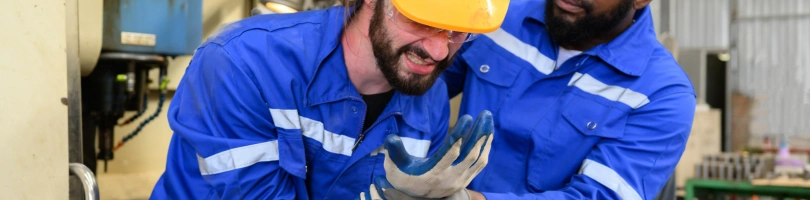
Hand and foot injuries at work represent some of the most disruptive workplace trauma victims experience. A crushed hand prevents typing, gripping tools, driving, and countless daily activities most people take for granted. Foot injuries can interfere with standing, walking, climbing, and balance, which are essential for most jobs.
 These injuries extend far beyond immediate pain. They destroy earning capacity, independence, and quality of life while creating mounting medical debt throughout recovery. Stewart Law Offices represents injured workers throughout Charlotte and Mecklenburg County.
Marcus Spake, Of Counsel and a North Carolina Board Certified Workers’ Compensation attorney, leads our hand and foot injury practice with more than 14 years of intensive courtroom experience. Marcus thoroughly investigates every claim detail and aggressively advocates for injured workers at every stage. Stewart Law Offices remains committed to ensuring you receive maximum compensation available under North Carolina law for your workplace injury.
The Impact of Hand and Foot Injuries on Your Work and Life
No other injuries affect a worker’s ability to perform their job as much as foot and hand injuries do. Damage to the hand limits the ability to grip, pinch, type, operate tools, and carry out the fine motor functions that most occupations require. An injury to the foot can make standing for a full shift impossible, restrict a person’s ability to lift and carry, and eliminate the physical mobility their job depends on.
According to the National Safety Council’s analysis of BLS data, upper extremities were the body part category most frequently affected by both days-away-from-work and DART (days away, restricted, or transferred) injuries and illnesses in the 2023 to 2024 reporting period. The median number of days away from work per incident across all lost-time cases was 8, and the median DART days per incident was 14, reflecting the significant impact of hand and foot injuries on a worker’s earning capacity.
At the national level, private industry employers reported 2.5 million nonfatal workplace injuries and illnesses in 2024, with hands, fingers, feet, and toes among the most commonly affected body parts in recorded lost-time cases.
Common Causes Of Foot And Hand Injuries In Charlotte Workplaces
No other injuries affect a worker’s ability to perform their job as much as foot and hand injuries do. Damage to the hand limits the ability to grip, pinch, type, operate tools, and carry out the fine motor functions that most occupations require. An injury to the foot can make standing for a full shift impossible, restrict a person’s ability to lift and carry, and eliminate the physical mobility their job depends on.
According to the National Safety Council’s analysis of BLS data, upper extremities were the body part category most frequently affected by both days-away-from-work and DART (days away, restricted, or transferred) injuries and illnesses in the 2023 to 2024 reporting period. The median number of days away from work per incident across all lost-time cases was 8, and the median DART days per incident was 14, reflecting the significant impact of hand and foot injuries on a worker’s earning capacity.
Foot and hand injuries occur across virtually every industry and job setting. Our Charlotte foot and hand injury attorneys see these injuries arise from many different workplace situations, including the following:
Struck-By And Falling Object Incidents
In warehouses along North Tryon Street, distribution facilities near the I-85 interchange, and construction sites throughout the greater Charlotte area, workers are regularly exposed to the risk of heavy objects falling from heights or being propelled by equipment. When a tool, piece of material, or component strikes an unprotected hand or foot, the result can be fractures, crush injuries, or traumatic amputations.
Construction accidents in Charlotte are a leading source of these impact injuries, particularly on active job sites where overhead work and material handling happen simultaneously at different elevations.
Caught-In And Pinch-Point Injuries
Manufacturing facilities, food processing operations, and warehouses throughout Mecklenburg County use machinery that creates dangerous pinch points and entanglement risks. When a hand is caught between moving parts, the damage to bones, tendons, nerves, and tissue can be severe and permanent. Workers who suffer these injuries in factory and warehouse environments may also have grounds for additional claims if a piece of equipment was defective or improperly maintained. Factory and warehouse accident claims, as well as machinery accident claims, fall within our team’s experience, and we evaluate each case for third-party liability that may expand the available recovery.
Slip And Fall And Workplace Fall Injuries
Falls are among the most common causes of foot injuries in the workplace. An ankle fracture from a slip on a wet floor, a crush injury to the foot from a ladder fall, or a toe injury sustained on an uneven surface can all result in lasting damage that requires surgery and extended rehabilitation. Workplace falls rank among the top causes of serious nonfatal injury across North Carolina workplaces, and these claims often involve disputed circumstances that benefit from experienced legal representation.
Repetitive Stress And Overuse Injuries
Not every foot or hand injury results from a single dramatic event. Repeated gripping, pinching, typing, hammering, or carrying tasks performed day after day place cumulative stress on tendons, joints, and nerves, which can eventually lead to conditions such as carpal tunnel syndrome, trigger finger, tendinitis, and stress fractures.
Repetitive stress injuries are compensable under North Carolina’s Workers’ Compensation Act as occupational diseases when employment is shown to be a significant contributing cause. These claims are often contested by insurance carriers and require careful medical documentation and legal advocacy to succeed.
Overexertion During Lifting And Carrying
Workers in Charlotte’s healthcare facilities, hotel operations, and warehouse environments frequently suffer foot and hand injuries while lifting, pushing, pulling, or carrying heavy objects under unsafe conditions. Overexertion injuries can fracture small bones in the hands and feet, tear ligaments and tendons, and cause crush-type injuries when loads shift unexpectedly, or a worker loses grip and a heavy object lands on the foot.
Burns And Chemical Exposure
Restaurant workers, laboratory staff, and chemical plant employees in Charlotte face burn and toxic exposure risks that can produce severe damage to the skin, nerves, and tissue of the hands, specifically. When a hand burn is deep enough to damage underlying structures, reconstructive surgery and long-term functional rehabilitation may both be necessary.
Medical Complications That Follow Foot And Hand Injuries In Charlotte
Foot and hand injuries are medically complex in ways that workers and their families frequently do not anticipate when the injury first occurs. The hand contains 27 bones, numerous tendons, multiple nerve pathways, and a vascular system critical to healing. The foot contains 26 bones and bears the full weight of standing, walking, and physical labor. Damage to either area can produce cascading effects.
The following are common medical complications:
- Nerve damage producing permanent numbness, tingling, or loss of sensation
- Tendon injuries limiting range of motion and grip strength
- Crush injuries resulting in compartment syndrome requiring emergency surgery
- Infections following open wounds in industrial environments
- Complex regional pain syndrome causing disproportionate, lasting pain
- Partial or total loss of a finger, toe, or limb in severe cases
Workers’ compensation benefits are designed to cover the full scope of medical treatment, including emergency care, surgery, specialist consultations, therapy, and ongoing rehabilitation.
The following treatments are typically covered:
- Emergency room and urgent care intervention
- Surgical procedures, including reconstructive operations
- Specialist consultations for orthopedic and neurological care
- Physical therapy and occupational therapy to restore function
- Long‑term rehabilitative care for chronic conditions
Our Charlotte foot and hand injury attorneys ensure that every necessary treatment is authorized and covered, preventing insurers from minimizing exposure or leaving critical medical needs unpaid.
Disability Ratings for Foot and Hand Injuries in Charlotte, NC Workers’ Compensation
A central component of every North Carolina workers’ compensation claim involving a foot or hand injury is the permanent partial disability rating assigned by the authorized treating physician after the injured worker reaches maximum medical improvement (MMI). This rating, expressed as a percentage of functional loss, directly determines the amount of permanent partial disability compensation the worker receives.
North Carolina uses a statutory schedule for permanent partial disability benefits under N.C. Gen. Stat. § 97‑31. Under this schedule:
- Permanent loss of use of a hand is compensated at two‑thirds of the average weekly wage for 200 weeks.
- Permanent loss of use of a foot is compensated at two‑thirds of the average weekly wage for 144 weeks.
- Compensation for loss of use of individual fingers and toes is based on specific scheduled weeks, depending on which digit is involved.
Insurance carriers often encourage their authorized physicians to assign the lowest defensible disability rating, thereby reducing the compensation the injured worker receives. An independent medical evaluation arranged through experienced counsel can provide a more accurate assessment of permanent functional loss.
Challenging an inadequate rating through the North Carolina Industrial Commission is frequently one of the most important steps in maximizing the value of a foot or hand injury claim.
When A Charlotte Third-Party Claim Can Expand Your Recovery
Workers’ compensation provides essential protections but has significant limitations. It does not compensate for pain and suffering, and it recovers only a fraction of lost wages rather than the full economic impact of the injury. However, when a third party outside of the employer-employee relationship caused or contributed to the foot or hand injury, a separate personal injury claim against that party may be available.
Common third-party scenarios in foot and hand injury cases include defective tools or machinery whose manufacturers failed to include adequate safety features, negligent contractors or subcontractors working on a shared job site, and property owners whose unsafe conditions caused a fall or incident resulting in the injury. Third-party claims can recover full lost wages, pain and suffering, and in appropriate cases, punitive damages, none of which are available through workers’ compensation. Our Charlotte work injury attorneys evaluate every foot and hand injury case for potential third-party liability that may significantly increase the client’s total recovery.
When Your Employer Fails To Meet Their Legal Obligations
Most Charlotte employers fulfill their workers’ compensation responsibilities in good faith. However, some do not. If your employer failed to provide claim forms, retaliated against you for reporting an injury or filing a claim, or attempted to pressure you into not pursuing benefits, those actions may have serious legal consequences for the employer.
North Carolina law prohibits adverse employment actions taken in response to workers’ compensation activity. Termination, demotion, reduction in hours, or hostile treatment following a claim filing can give rise to a workers’ comp retaliation claim that our attorneys handle separately from the underlying injury claim.
Employers who fail to carry workers’ compensation insurance as required under N.C. Gen. Stat. § 97‑93 may lose the protections of the Workers’ Compensation Act. In such cases, they can be exposed to direct civil liability for an injured worker’s full damages, an avenue our workers’ compensation attorneys will explore when applicable.
What To Do After A Foot Or Hand Injury At Work In Charlotte
Report the injury to your employer right away and in writing. State the date, time, location, and how the injury occurred, and keep a copy of your written notice.
Seek authorized medical treatment immediately. Even if the injury appears manageable, a thorough evaluation documents the injury’s nature and severity, which forms the foundation of your claim. Follow all treatment recommendations and attend all scheduled appointments.
File a Form 18 with the North Carolina Industrial Commission within two years. Our Charlotte foot and hand injury attorneys assist with this filing and ensure it is submitted correctly and on time.
Preserve all documentation. Keep records of every medical visit, prescription, physical therapy session, and out-of-pocket expense. Note how the injury affects your ability to perform daily activities and work duties, as this information supports your disability rating and wage replacement claim.
Do not provide a recorded statement to the insurance carrier without legal guidance. Insurance adjusters are trained to use recorded statements to minimize claims, and you have no obligation to provide one before consulting an attorney.
Contact Stewart Law Offices immediately. The sooner our team is involved, the sooner we can protect your rights, preserve evidence, and begin building the strongest possible case.
Visit Our Foot and Hand Injury Attorneys in Charlotte, NC
Contact A Charlotte Foot And Hand Injury Attorney Today
If you or a member of your family has suffered a serious foot or hand injury at a Charlotte workplace, whether at a construction site, a manufacturing facility, a warehouse near the airport, a restaurant, or any other work setting throughout Mecklenburg County, Stewart Law Offices is ready to review your situation at no cost.
Our Charlotte foot and hand injury attorneys understand how much is at stake when a hand or foot is injured, and we pursue the full scope of available workers’ compensation benefits in every case we accept. We offer free consultations and handle cases on a contingency fee basis, meaning you pay nothing unless we recover compensation for you. Contact Stewart Law Offices at your earliest convenience to discuss your hand or foot injury claim.
FAQs About Hand and Foot Injuries in Charlotte, NC
For hand injuries in Charlotte, North Carolina, you can receive medical expense coverage for all treatment necessary to address your injury, disability benefits replacing approximately two-thirds of lost wages, permanent partial disability compensation based on your injury severity, and vocational rehabilitation helping you transition to different work if necessary. Specific compensation amounts depend on whether your injury involves partial or complete loss of function, which fingers or hand areas were affected, and whether the injury prevents returning to your prior employment.
North Carolina imposes a 7-day waiting period before weekly wage-replacement (disability) benefits begin. This means you generally do not receive compensation for the first seven days of disability. If your disability lasts more than 21 days, you receive retroactive payment for the initial seven-day waiting period. Medical benefits (payment for doctor visits, surgery, physical therapy, etc.) have no waiting period and should begin as soon as treatment is authorized. The seven-day waiting period applies to all work-related injuries in North Carolina, including foot injuries. It is not specific to Charlotte or any particular body part.
Yes, you can receive workers’ compensation for repetitive stress hand and foot injuries in Charlotte, North Carolina, that developed gradually from your job duties rather than from single traumatic events. These occupational disease claims are more complex because they lack clear injury dates, but your attorney can establish causation by demonstrating how your specific work activities caused the gradual injury over time through medical expert testimony and employment history documentation.
If your uninsured employer in Charlotte, North Carolina, caused your hand injury, you can pursue a civil negligence claim directly against your employer for all damages, including medical expenses, lost wages, and pain and suffering. Additionally, North Carolina’s Uninsured Employers’ Fund may provide benefits if your employer failed to maintain required workers’ compensation insurance. An attorney helps you navigate both pathways to recover compensation.