
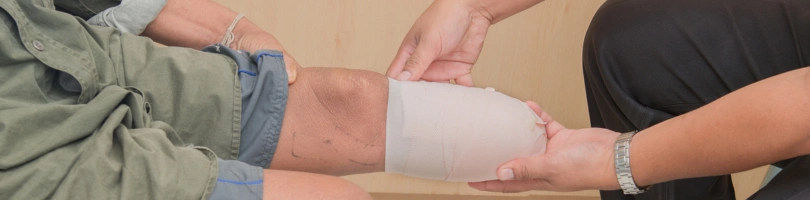
Charlotte Workplace Amputation Injury Lawyers
Legally Reviewed by Marcus Spake: Sep 01, 2026
Losing a finger, hand, arm, foot, or leg in a workplace accident is one of the most devastating things that can happen to a working person. The physical consequences are permanent. The financial consequences arrive immediately. And the road back to any semblance of normal life is long, expensive, and emotionally exhausting. If you or someone in your family suffered an amputation injury on the job anywhere in Charlotte or the surrounding Mecklenburg County area, Stewart Law Offices is prepared to fight for every benefit and dollar of compensation you are entitled to receive under North Carolina law.
 Our team includes Marcus Spake, Of Counsel at Stewart Law Offices, a North Carolina Bar-licensed attorney who carries Board Certification in Workers’ Compensation law through the North Carolina State Bar. That credential represents an advanced level of skill and expertise recognized by the state’s own legal community, and Marcus brings it to every client he represents. With more than 14 years of experience guiding injured workers through the complexities of North Carolina’s workers’ compensation system, Marcus approaches each amputation injury case with a thorough factual investigation, a clear-eyed evaluation of what benefits are available, and a commitment to pursuing every avenue of recovery on behalf of the worker and their family.
At Stewart Law Offices, our Charlotte workplace amputation injury lawyers handle all cases on a contingency-fee basis. There are no upfront fees, and you owe us nothing unless and until we recover compensation on your behalf.
Common Causes Of Workplace Amputation Injuries In Charlotte
Amputation injuries are classified as severe injuries under federal OSHA regulations, and employers covered by federal OSHA are required under 29 CFR 1904.39 to report any work-related amputation to OSHA within 24 hours of learning of it.
Amputation injuries in the workplace rarely occur without a contributing failure in equipment, training, supervision, or safety protocols. Understanding the cause of your specific injury is central to identifying who is legally responsible and what sources of compensation may be available.
The following are common causes:
- Unguarded or defectively guarded machinery such as presses, conveyors, grinders, and slitters
- Forklift and powered industrial truck accidents, with OSHA recording 1,190 severe forklift injuries in 2022–2023, including 196 amputations
- Construction site accidents involving saws, nail guns, trench collapses, and heavy equipment on Charlotte’s active development sites
- Caught‑in or crush injuries, which OSHA identified as the most frequent severe injury event type in 2022–2023, accounting for 4,158 cases or 23 percent of all reports
- Food processing equipment accidents with grinders, mixers, slicers, and band saws, causing 440 severe injuries in 2022–2023, three‑quarters involving finger amputations
- Vehicle accidents during work, including delivery drivers and utility workers suffering traumatic amputations in roadway collisions
These injuries are catastrophic both medically and professionally. Workers’ compensation claims must account for medical treatment, lost wages, and permanent disability, while third‑party claims may provide additional recovery when negligence by outside parties contributes to the injury.
What Amputation Injuries Require Medical and Financial
An amputation is not a single medical event. It is the beginning of a long, expensive, and physically demanding journey that most injured workers and their families are completely unprepared for. Understanding the full scope of what an amputation requires is essential to pursuing compensation that actually reflects reality.
- Emergency and Surgical Care. An amputation requires immediate surgical intervention, which may involve attempts at reattachment, wound closure, bone shortening, and flap procedures. Emergency care alone for a traumatic amputation can produce costs that reach well into six figures at a major Charlotte-area trauma center.
- Prosthetics and Rehabilitation. A high-quality prosthetic limb for an arm or leg can cost tens of thousands of dollars and requires regular fitting adjustments, repairs, and eventual replacement. A prosthetic hand with myoelectric capabilities can cost significantly more, and the assistive devices needed for activities of daily living add further expense. Physical and occupational therapy to help a worker adapt to life with a prosthetic limb typically extends over months or years.
- Psychological Treatment. The psychological toll of a traumatic amputation is substantial and well-documented. Post-traumatic stress disorder, depression, anxiety, and grief over the permanent loss of a body part are recognized consequences that require professional mental health treatment. These are legitimate medical expenses that should be covered as part of a comprehensive workers’ compensation claim.
- Future Medical Care. Because prosthetic devices wear out, require upgrades, and must be refitted as a person’s body changes over time, amputation injuries carry ongoing medical costs that extend across a lifetime. A workers’ compensation settlement or award that fails to account for future prosthetic and medical needs will leave an injured worker with significant uncovered expenses for decades.
Workers’ Compensation Benefits For Amputation Injuries In North Carolina
North Carolina workers’ compensation law provides specific protections for workers who suffer amputations. Charlotte Workplace Amputations Injury Lawyers work to secure all applicable benefits, which may include:
- Full medical coverage for surgeries, hospital stays, prosthetics, therapy, and related care.
- Temporary total disability benefits when you cannot work during the recovery period.
- Permanent partial disability benefits based on the loss of use or amputation of a particular body part, using scheduled ratings that assign value to fingers, hands, arms, toes, feet, and legs.
- Permanent total disability benefits if the amputation, combined with other injuries, prevents you from performing any suitable employment.
- When an amputation results in a worker’s death, surviving dependents may be entitled to death benefits under North Carolina law.
Charlotte Workplace Amputations Injury Lawyers calculate your average weekly wage carefully and ensure the correct rating is applied to your injury so your benefits reflect its true impact on your earning capacity.
Disputes In Amputation Injury Claims
Workers who suffer amputation injuries on the job often assume that the severity and obvious nature of their injury mean the workers’ compensation process will be straightforward. That assumption is frequently wrong. Insurance carriers dispute amputation claims and attempt to limit benefits in several common ways.
The following are common disputes:
- Employer‑directed physicians minimizing disability ratings to reduce benefits
- Independent medical examinations used to assign lower impairment values
- Misclassification of workers as independent contractors to deny coverage
- Legal challenges over whether the injury qualifies for permanent disability benefits
These disputes can significantly reduce compensation if left unchallenged. Experienced Charlotte Workplace Amputations Injury attorneys can pursue denied claims at every stage of the appeals process, from initial review through hearings before the Industrial Commission.
How To Report An Amputation Injury And File A Claim In North Carolina
Report the injury to your employer immediately. While North Carolina’s reporting deadline is 30 days under N.C. Gen. Stat. § 97-22, an amputation is typically an emergency that makes reporting automatic. A written notice that creates a dated record is always preferable to a verbal one.
File a Form 18 with the North Carolina Industrial Commission within two years of the injury date to preserve your claim. Our workplace amputation injury attorneys can guide you through the workers’ comp claim process step by step, helping you meet deadlines and requirements.
Seek medical treatment from the approved physician your employer’s insurer directs you to, but document every concern and follow up with an independent medical evaluation if you believe your condition is not being accurately assessed.
Contact Stewart Law Offices before accepting any settlement offer or signing any release. A clincher agreement finalizing your workers’ compensation claim may permanently waive your right to future medical benefits for your amputation. The stakes of settling too early with an amputation injury are especially high given the lifetime costs involved.
Visit Our Workplace Amputation Injury Lawyers
Contact The Charlotte Workplace Amputation Injury Lawyers At Stewart Law Offices Today
Contact Stewart Law Offices immediately after amputation injury. Do not wait for insurance companies to contact you. Early investigation preserves evidence, identifies witnesses, and documents scene conditions. Early attorney involvement prevents you from making statements that damage your claim.
We handle negotiations with medical providers, insurance correspondence, and settlement discussions. You participate in all major decisions but don’t bear the burden alone.
Call us at (704) 521-5000 or contact us online for your free consultation. We represent amputation victims on a contingency basis, meaning you pay nothing unless we recover compensation. Let us fight for the full value of your claim and the resources necessary to rebuild your life after this catastrophic injury.
Frequently Asked Questions About Workplace Amputation Injuries In Charlotte, North Carolina
Insurance companies frequently deny prosthetic replacement claims in Charlotte, North Carolina, arguing that replacements are cosmetic rather than medically necessary or that they result from wear rather than a work-related injury. Proper legal advocacy challenges these denials through medical evidence demonstrating functional necessity. Courts often require payment for prosthetic replacement because amputees cannot function without updated devices as technology advances and body changes occur.
Phantom limb pain is the sensation of pain, burning, or discomfort in a limb that no longer exists, affecting most amputation victims in Charlotte, North Carolina, for years after injury. Phantom limb pain qualifies for workers’ compensation treatment coverage and disability benefits because it results directly from the workplace amputation. Treatment costs, including medications, interventional procedures, and pain management, are covered under workers’ compensation medical benefits.
Yes, if amputation in Charlotte, North Carolina, permanently prevents return to any work, you may qualify for permanent total disability benefits, providing ongoing payments equal to two-thirds of your average weekly wages. These benefits typically continue for life. Additionally, vocational rehabilitation benefits help with retraining if a limited return to work is possible. Your attorney will determine whether permanent total disability or partial disability benefits apply to your specific circumstances.