
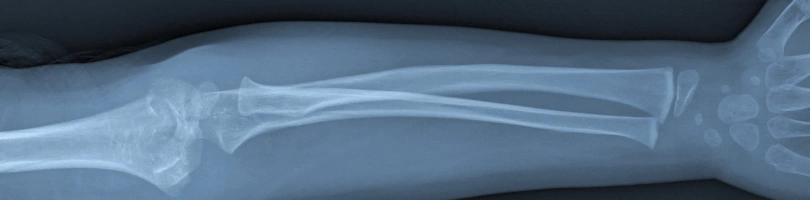
Charlotte Workplace Broken Bone Injury Lawyer
Legally Reviewed by Marcus Spake: Sep 01, 2026
Suffering a broken bone in a workplace accident in Charlotte can devastate your life. The injury itself causes excruciating pain and mobility restrictions. But the financial fallout often causes equal damage. Lost wages pile up while you heal. Medical bills mount. Your employer’s insurance company circles, hoping you’ll settle for pennies before fully understanding the scope of your injury.
 You don’t have to navigate this alone. Stewart Law Offices represents injured workers throughout Charlotte and North Carolina who’ve sustained broken bones and fractures on the job. Marcus Spake, Of Counsel at Stewart Law Offices, is a North Carolina Board Certified Workers’ Compensation attorney bringing more than 14 years of dedicated experience fighting for injured workers’ rights. Marcus thoroughly investigates every claim and aggressively pursues every case at every stage of the process. We’re committed to pursuing maximum compensation available under North Carolina law.
When you work with a Charlotte workplace broken bones lawyer from Stewart Law Offices, you gain advocates who understand the medical complexity of fracture injuries and the legal pathways to full recovery.
How Broken Bones Happen in Charlotte Workplaces
Workplace fractures in Charlotte and surrounding Mecklenburg County occur through multiple mechanisms, each carrying its own medical and legal implications. According to the U.S. Bureau of Labor Statistics, North Carolina recorded 196 fatal workplace injuries in 2024, with falls accounting for 14 of the 36 construction sector fatalities. Private industry employers also reported 64,200 nonfatal workplace injuries and illnesses, a TRC rate of 1.9 cases per 100 full‑time equivalent workers.
Understanding how your specific broken bone injury happened helps shape how your claim is investigated and presented. The following are common causes:
Workplace Falls
Workplace falls remain one of the leading causes of workplace fracture injuries. A worker slipping on a wet floor, losing balance on an icy pavement, missing a step on a staircase, or falling from scaffolding can suffer fractures ranging from minor breaks to life‑altering injuries. Non‑fatal fractures from falls are far more common than fatalities and affect workers across industries from healthcare to retail to manufacturing.
Struck‑By Injuries
Being struck by falling objects or equipment produces significant impact injuries that frequently result in fractures. Construction workers face this risk constantly as materials drop from upper levels. Manufacturing facilities and warehouses expose workers to impact hazards from machinery components, equipment failures, or heavy items falling from shelves. Even healthcare workers may be struck by patients or medical equipment.
Machinery Entrapment
Machinery Accidents often involve machinery entrapment injuries, which occur when a limb becomes caught between moving parts. Factory workers, construction equipment operators, and maintenance technicians face this risk daily. The force exerted by industrial machinery can cause complex fractures involving multiple bones and significant soft-tissue damage.
Motor Vehicle Accidents
Motor vehicle accidents during work duties cause fracture injuries ranging from simple breaks to compound fractures with life‑threatening complications. Delivery drivers, rideshare operators, traveling sales professionals, and workers commuting as part of their employment duties are all at risk. These collisions often require extensive medical treatment and long recovery periods.
Overexertion And Improper Lifting
Overexertion and improper lifting mechanics can produce fractures when workers attempt to move loads beyond safe limits or use incorrect techniques. Repetitive stress over time can weaken bones, making them susceptible to breaks from forces that would not normally cause injury. Construction workers, warehouse employees, and healthcare staff who regularly lift patients are particularly vulnerable.
Types Of Broken Bone Injuries Seen In Charlotte Workplaces
The adult skeleton contains 206 bones, and a fracture in any of them can significantly impair a worker’s ability to perform their job. The type of fracture affects both the medical treatment required and the expected duration of disability, which in turn shapes the workers’ compensation claim.
The following are common types:
- Simple or closed fractures where the bone breaks but does not penetrate the skin
- Compound or open fractures involving a broken bone piercing through the skin, carrying high risk of infection
- Comminuted fractures, where the bone shatters into multiple fragments, often requiring surgical reconstruction
- Avulsion fractures caused by tendons or ligaments pulling bone fragments away, common in joint areas
- Stress fractures from repetitive loading, frequently affecting the feet and lower legs
- Spiral fractures from twisting forces often occurring in slip‑and‑fall incidents
- Oblique and transverse fractures describe the angle of bone break under direct force
- Vertebral compression fractures from falls, heavy lifting, or repeated spinal loading, sometimes causing neurological damage
Each fracture type presents unique medical and legal challenges. Proper diagnosis, documentation, and legal representation ensure that workers receive the full benefits and compensation necessary for recovery and long‑term stability.
How Workers’ Compensation Helps After A Workplace Broken Bone
When a broken bone happens at work, North Carolina workers’ compensation is meant to cover medical care and a portion of lost wages, regardless of fault. Charlotte Workers’ Comp Lawyers help injured workers secure:
- Payment for emergency care, imaging, surgery, hospital stays, and follow‑up visits.
- Coverage for medications, physical therapy, and rehabilitation.
- Temporary disability benefits when you cannot work or must work fewer hours.
- Permanent partial disability benefits are awarded when the fracture leaves a lasting loss of function.
If a broken bone prevents you from returning to your previous job, you may also qualify for vocational assistance to transition into work that fits your new limitations. In fatal cases linked to workplace accidents, families may be entitled to Death Benefits under North Carolina workers’ compensation. Charlotte Workplace Broken Bones Lawyers ensure all appropriate categories of benefits are considered and pursued.
How A Third-Party Claim Can Provide Additional Compensation
Workers’ compensation is the primary remedy against an employer for a work-related injury, but it does not cover pain and suffering or full lost wages. When a third party contributed to the fracture, a separate personal injury claim against that party may be available in addition to workers’ compensation benefits.
Common scenarios where third-party liability applies to workplace fracture injuries include defective machinery or tools whose manufacturer failed to provide adequate safety features, negligent contractors or subcontractors on multi-employer job sites, property owners whose unsafe premises caused a fall-related fracture, and at-fault drivers who caused a crash while a worker was traveling in the course of employment.
Third-party claims can recover compensation for pain and suffering, the full value of lost wages rather than the two-thirds fraction available through workers’ comp, and punitive damages in cases where the third party’s conduct was especially reckless. Our Charlotte workplace broken bones attorneys evaluate every fracture case for third-party liability and pursue both tracks of recovery when the facts support it.
When Workers’ Compensation Claims For Broken Bones Are Denied
Fracture claims are sometimes denied despite clear evidence that the injury was work-related. Common grounds for denial include arguments that the fracture occurred outside the scope of employment, that a pre-existing bone condition rather than the workplace event caused the break, or that the required 30-day notice to the employer under N.C. Gen. Stat. § 97-22 was not timely given, or that the claim was not filed within the two-year statute of limitations.
A denial triggers the right to appeal through the North Carolina Industrial Commission. The process begins with a mediation conference and, if mediation does not resolve the dispute, proceeds to a hearing before a Deputy Commissioner where medical records, imaging studies, employer statements, and expert testimony are presented. Further appeals to the Full Commission and the North Carolina Court of Appeals are available if the Deputy Commissioner’s decision is unfavorable. Our Charlotte workplace broken bones lawyers are experienced at every level of this process and build the evidentiary record needed to succeed.
What To Do After You Suffer A Broken Bone At Work In Charlotte
After a workplace fracture, your priority is health. Seek immediate medical care and follow all treatment recommendations. Report the injury to your supervisor or employer as soon as possible, including details about how and where it happened. Failing to report promptly can create problems later on.
Keep copies of medical records, bills, and work notes, and write down how the injury affects daily tasks and job duties. Do not sign settlement documents or accept offers without understanding how they affect your rights. Charlotte Workplace Broken Bones Lawyers can help you file your claim correctly, respond to questions from the insurance company, and protect you from actions that may weaken your case. If your employer or insurer disputes your claim, denies coverage, or cuts off benefits, we can assist with denied Claims and explain how to file a workers’ Comp Claim or appeal adverse decisions.
Visit Our Workplace Broken Bones Injury Attorneys in Charlotte
Let Stewart Law Offices Fight for Your Broken Bone Claim
Broken bones change your life. Stewart Law Offices fights to ensure compensation covers all life-altering impacts. We calculate lifetime medical costs, lost earning capacity, vocational rehabilitation needs, pain and suffering, and permanent limitations. We demand full compensation, not quick settlements benefiting insurance companies.
Frequently Asked Questions About Workplace Broken Bones in Charlotte, North Carolina
Yes, if your broken bone causes permanent disability preventing return to your prior occupation in Charlotte, North Carolina, you qualify for permanency benefits calculated based on your impairment rating and average weekly wage. Permanent disability compensation continues indefinitely if you cannot perform any gainful employment. Your physician’s medical documentation of permanent limitations and impairment rating determines compensation value. Experienced attorneys ensure that permanent disability benefits account for lifetime loss of earning capacity.
Yes, if someone other than your employer caused your broken bone injury in Charlotte, North Carolina, you may pursue a third-party claim against that person or entity. For example, a defective equipment manufacturer, negligent contractor, or unsafe property owner may be liable. Third-party claims recover compensation beyond workers’ compensation, including damages for pain and suffering. Experienced attorneys identify all responsible parties and pursue maximum recovery from all sources.
If your broken bone creates permanent restrictions preventing return to your prior job in Charlotte, North Carolina, you qualify for vocational rehabilitation services and lost earning capacity compensation. Vocational rehabilitation covers retraining to match your permanent limitations to different work. Lost earning capacity damages compensate for reduced lifetime earning potential. Experienced Charlotte workplace broken bones Lawyers ensure compensation accounts for your specific occupation and age.
No, you should never settle your broken bone claim quickly in Charlotte, North Carolina, without fully understanding fracture complications and permanent limitations. Early settlement offers are typically far below the actual claim value and don’t account for future treatment needs or permanent disabilities that may develop after settlement. Once you accept the settlement, you cannot recover additional compensation even if your condition worsens. Experienced attorneys negotiate fair settlements covering all lifetime medical needs and the impact on earning capacity.