
Spartanburg Head-On Collision Truck Accident Lawyer
Legally Reviewed by the Stewart Law Offices Content Team: Sep 22, 2026
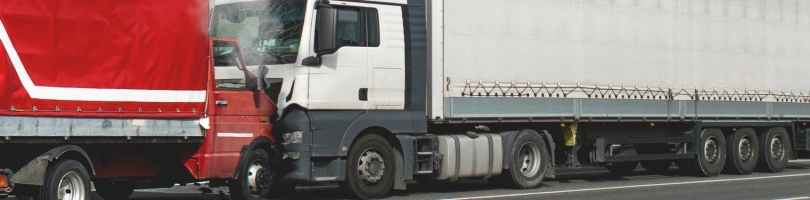
A head-on collision with a commercial truck can leave little room for anyone in the approaching vehicle to escape the impact. When a tractor-trailer crosses the center line or enters traffic traveling in the opposite direction, the resulting crash can cause catastrophic injuries, permanent disability, or death. For injured people and their families, the days that follow may involve emergency treatment, missed work, uncertainty about future medical needs, and immediate contact from commercial insurance carriers.
These crashes deserve a careful investigation because the truck driver is not necessarily the only party whose conduct matters. Driver fatigue, distraction, unsafe passing, mechanical problems, poor maintenance, cargo issues, and decisions made by the motor carrier can all contribute to a truck leaving its proper lane.
 Sam Bass, a licensed attorney and member of the South Carolina Bar with more than 16 years of experience handling serious injury cases throughout Spartanburg County, leads these claims with the depth of knowledge these complex cases require. When the opposing side has experienced legal counsel and a well-funded insurer working from day one, the quality of representation on the other side determines the outcome.
Commercial trucks regularly travel through Spartanburg County on I-85, I-26, US-29, and the roads connecting local manufacturing, distribution, and commercial areas. When a frontal collision occurs on one of these routes or a smaller road in the surrounding Upstate, a Spartanburg head-on truck accident Lawyer can investigate how the truck entered opposing traffic and determine which parties may bear legal responsibility.
Why Head-On Truck Collisions Produce Catastrophic Outcomes
A head-on truck collision differs from many ordinary passenger-vehicle crashes because two vehicles traveling toward one another can generate tremendous impact forces, especially when one vehicle is a loaded tractor-trailer.
The front of a passenger vehicle may collapse during the impact, leaving occupants vulnerable to intrusion into the passenger compartment. Airbags and seat belts can reduce injury risk, but they cannot eliminate the forces generated in a severe collision with a large commercial vehicle. According to the Insurance Institute for Highway Safety, large trucks are involved in approximately 9 percent of all motor vehicle crash deaths in the United States despite representing a far smaller share of vehicles on the road.
Survivors may require emergency surgery followed by months of rehabilitation. Some cannot return to their previous occupations. Others need assistance with everyday activities because of permanent neurological, orthopedic, or cognitive limitations.
When the collision is fatal, surviving family members may have a separate wrongful death claim under South Carolina law.
Common Causes Of Head-On Truck Collisions
Head-on truck collisions may result from:
- Crossing the center line.
- Unsafe passing on a two-lane road.
- Driver fatigue or hours-of-service violations.
- Alcohol or drug impairment.
- Distracted driving or phone use.
- Excessive speed or driving too fast for conditions.
- Tire, brake, steering, or suspension failure.
- Improperly loaded or shifting cargo.
- Wet, icy, or obstructed roadways.
- Sudden evasive maneuvers.
A Spartanburg head-on truck accident lawyer can investigate whether the driver, carrier, shipper, maintenance provider, or another party contributed to the collision.
How South Carolina Law Establishes Fault in Head-On Truck Cases
South Carolina law requires an injured plaintiff to establish that the defendant’s negligent conduct directly caused the crash and the resulting injuries. In head-on truck crashes, two statutory provisions frequently form the foundation of the liability case.
Under S.C. Code § 56-5-1810, upon all roadways of sufficient width a vehicle must be driven upon the right half of the roadway, except when overtaking and passing another vehicle, when an obstruction makes it necessary to drive left of center, on certain multi-lane roads, or on one-way roadways. A truck driver who crosses the center line and enters opposing traffic has violated this statute directly, and that violation establishes the breach of duty element of a negligence claim.
South Carolina applies a modified comparative negligence rule under S.C. Code § 15‑38‑15. Victims may recover compensation if their fault is under 51 percent, with recovery reduced by their share. In head‑on truck crashes where the truck crossed into opposing traffic, fault usually rests with the driver and carrier. Evidence showing the truck’s center‑line violation defeats insurer arguments.
Who Can Be Held Liable
Multiple parties frequently share responsibility for a head-on truck crash in Spartanburg. The truck driver bears direct liability for the lane departure. The trucking company faces liability for the driver’s negligence under respondeat superior and independent liability for negligent hiring, inadequate safety training, hours-of-service violations it encouraged or permitted, and failure to maintain the vehicle in safe operating condition. The cargo loading company bears liability when improperly secured or overloaded freight contributed to instability.
Equipment manufacturers face product liability when a defective brake, tire, or steering component fails. Identifying every responsible party from the outset protects the injured victim’s ability to recover the full value of the claim from every available source. A Spartanburg truck accident lawyer can identify the parties involved and investigate their roles before important records disappear.
Severe Physical Trauma Associated with Head-On Collisions
The human body is not designed to withstand the forces of a frontal commercial crash. Victims frequently suffer from traumatic brain injuries, severe spinal cord damage, and catastrophic internal bleeding. The sudden deceleration can also cause compound fractures and crush injuries that require multiple reconstructive surgeries.
Tragically, the immense force involved means these incidents have a high probability of resulting in a fatal truck accident, leaving surviving families to navigate profound grief and sudden financial hardship.
Compensation Available After a Head-On Truck Crash in Spartanburg
Available compensation includes all past and future medical expenses, lost wages during recovery, reduced earning capacity when permanent injuries affect the ability to return to prior work, pain and suffering damages reflecting the physical and emotional consequences of the injuries, permanent disability or disfigurement compensation, and wrongful death damages for surviving family members when a head-on truck crash proves fatal.
When a trucking company’s conduct reflects reckless disregard for safety, South Carolina law may allow punitive damages to address conduct beyond ordinary negligence. Distracted truck drivers whose in-cab device use caused the lane departure represent one of the clearest examples where punitive damage arguments are most supportable.
Visit Our Head-On Collision Truck Accident Attorneys in Spartanburg, SC
Build A Stronger Truck Accident Claim
A head-on tractor-trailer crash raises a simple but critical question. Why was the truck in the path of oncoming traffic?
Answering it may require much more than reading a crash report. Driver records can reveal fatigue or distraction. Vehicle data may document speed and braking. Maintenance files can uncover unresolved mechanical problems. Video and physical evidence can establish lane position. Corporate records may show whether unsafe decisions extended beyond the individual driver.
If you or a family member suffered serious injuries in a frontal commercial vehicle collision, a Spartanburg truck accident lawyer at Stewart Law Offices can examine those issues and explain the legal options available under South Carolina law.
Call Stewart Law Offices at (864) 583-2223 for a free case review and a conversation about what happened, what evidence may still be available, and what steps can protect your claim.
FAQs About Head-On Collision Truck Accidents in Spartanburg
Evidence in a Spartanburg, SC head-on truck case may include police measurements, debris location, tire and gouge marks, photographs, nearby surveillance footage, dash-camera recordings, witnesses, electronic vehicle data, and accident reconstruction findings, while driver logs, phone information, dispatch communications, and maintenance records may help explain why the truck crossed the center line rather than merely establishing where the collision occurred.
A mechanical failure does not necessarily prevent recovery after a collision in Spartanburg, SC, because an investigation may reveal negligent inspection, deferred maintenance, improper repairs, a defective component, or a failure to remove an unsafe commercial vehicle from service, and the evidence can determine whether responsibility belongs to the motor carrier, maintenance provider, parts manufacturer, driver, or more than one party.
Rain, fog, or another weather condition does not automatically excuse a truck driver or carrier after a Spartanburg, SC crash because commercial drivers must operate appropriately for existing conditions, so investigators may examine speed, visibility, braking, tires, driver decisions, weather reports, roadway evidence, and whether the truck should have slowed substantially or stopped rather than continuing in a manner that led to loss of lane control.
Yes, depending on the evidence, a Spartanburg, SC commercial truck case can involve potential responsibility by the driver, motor carrier, maintenance contractor, cargo-loading business, vehicle or component manufacturer, or another entity, which is why investigating corporate relationships, contracts, vehicle ownership, maintenance responsibilities, employment arrangements, and cargo records can be important before determining which parties should be included in a claim.
When injuries from a Spartanburg, SC truck collision permanently limit a person’s ability to work, a damages evaluation may consider wages already lost as well as diminished future earning capacity, while medical evidence, employment history, restrictions, education, skills, anticipated career path, and sometimes vocational or economic analysis can help demonstrate how traumatic brain injury, spinal damage, orthopedic limitations, or another permanent condition changed the person’s financial future.