
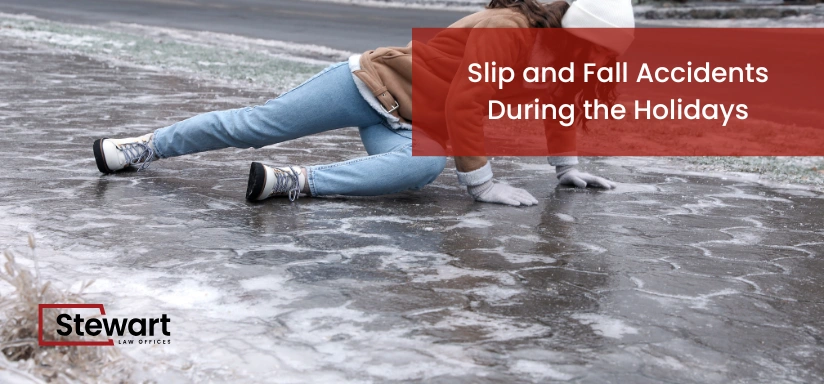
The holiday season transforms stores and public spaces into festive destinations—but also creates dangerous conditions for slip and fall accidents. From wet floors in crowded malls to cluttered walkways and icy parking lots, premises liability accidents spike from November through January. At Stewart Law Offices, we see these preventable injuries every year across the Carolinas, and we’re here to help you understand your rights if you’ve been hurt.
Why Holiday Slip and Falls Increase
Winter Weather
Rain, ice, and unpredictable weather create slippery conditions. Wet floors from tracked-in precipitation, icy parking lots, and standing water near entrances are common hazards. Snow-related slip and fall accidents can cause anything from minor bruises to severe fractures and hospitalization. Approximately 17,000 people die annually from slipping on ice.
Crowded Stores
Holiday shopping brings unprecedented crowds to retail stores, malls, restaurants, and markets. More foot traffic means more spills and wear on floors—especially when property owners fail to maintain proper safety protocols.
Festive Decorations
Extension cords across walkways, tangled lights, cluttered aisles, a ladder left out from hanging decorations, and obstructed exits create tripping hazards.
Rushed Maintenance
During the holiday rush, employees often fail to clean spills promptly, neglect regular inspections, and prioritize customer service over safety.
Distracted Shoppers
Holiday shoppers juggle packages, check phones, watch decorations, and manage children. While property owners can’t control behavior, they must maintain safe conditions.
Understanding Premises Liability Law
When you’re injured on someone else’s property, the owner may be liable. Both states recognize similar duties of care but handle fault determination differently.
Duty of Care
Property owners owe customers and patrons called “invitees” the highest duty of care. This includes regularly inspecting for hazards, promptly fixing dangerous conditions, warning visitors of known hazards, and maintaining safe walkways and parking lots.
Social guests are known as “licensees” and receive slightly less protection, while trespassers receive minimal duty.
Proving Your Case
To recover compensation, you must prove the property owner owed you a duty of care, breached that duty by creating or failing to fix a hazard, the hazard caused your fall and injuries, and you suffered actual damages like medical bills and lost wages.
The “Notice” Requirement
A critical issue is whether the property owner had “actual or constructive notice” of the dangerous condition. Actual notice means they knew about the hazard. Constructive notice means the hazard existed long enough that reasonable inspections should have discovered it.
For example, a grape on the floor for 30 seconds likely won’t create liability. A grape on the floor for two hours should have been discovered and removed.
How Fault Affects Your Recovery
This is where state law dramatically differs—and it can determine whether you receive compensation or nothing at all.
South Carolina’s Modified Comparative Negligence
South Carolina follows S.C. Code § 15-38-15, which is relatively fair to injured parties. If you’re more than 50% at fault, you recover nothing. If you’re 50% or less at fault, your compensation is reduced by your fault percentage.
If a jury awards you $100,000 but finds you 20% at fault for not watching where you walked, you receive $80,000. This recognizes that accidents often involve some shared responsibility.
North Carolina’s Contributory Negligence
North Carolina follows one of America’s strictest rules: if you’re found even 1% at fault, you cannot recover any damages.
If a jury finds the property owner 99% at fault and you 1% at fault for being slightly distracted, you receive zero compensation. North Carolina is one of only four states with this “all or nothing” rule.
This makes North Carolina premises liability cases extremely difficult. Insurance companies aggressively argue you share even minimal fault to bar recovery entirely.
Types of Compensation
You may recover medical expenses, lost wages, loss of earning capacity, pain and suffering, and property damage. In South Carolina, rare cases involving reckless conduct may include punitive damages.
Injured This Holiday Season? Talk to a Slip-and-Fall Attorney Today
If you’ve been injured in a slip and fall accident this holiday season, don’t face the insurance companies alone. At Stewart Law Offices, our experienced slip and fall lawyers understand how to handle cases in both states. We’ll investigate your accident thoroughly, gather the evidence you need, and fight for the compensation you deserve while you focus on recovery.
Call 866-STEWART (866-783-9278) today for a free consultation.