Traumatic Brain Injury Statistics
The scale of traumatic brain injury in the United States — and in North Carolina — is far larger than most people realize.
According to the CDC, there were approximately 214,110 TBI-related hospitalizations in the United States in 2020, and 68,663 TBI-related deaths in 2023. That translates to more than 586 TBI-related hospitalizations and 190 TBI-related deaths every single day.
Adults aged 75 and older have the highest rates of TBI-related hospitalizations and deaths, accounting for approximately 32 percent of TBI-related hospitalizations and 28 percent of TBI-related deaths. Males are nearly two times more likely to be hospitalized and three times more likely to die from a TBI than females.
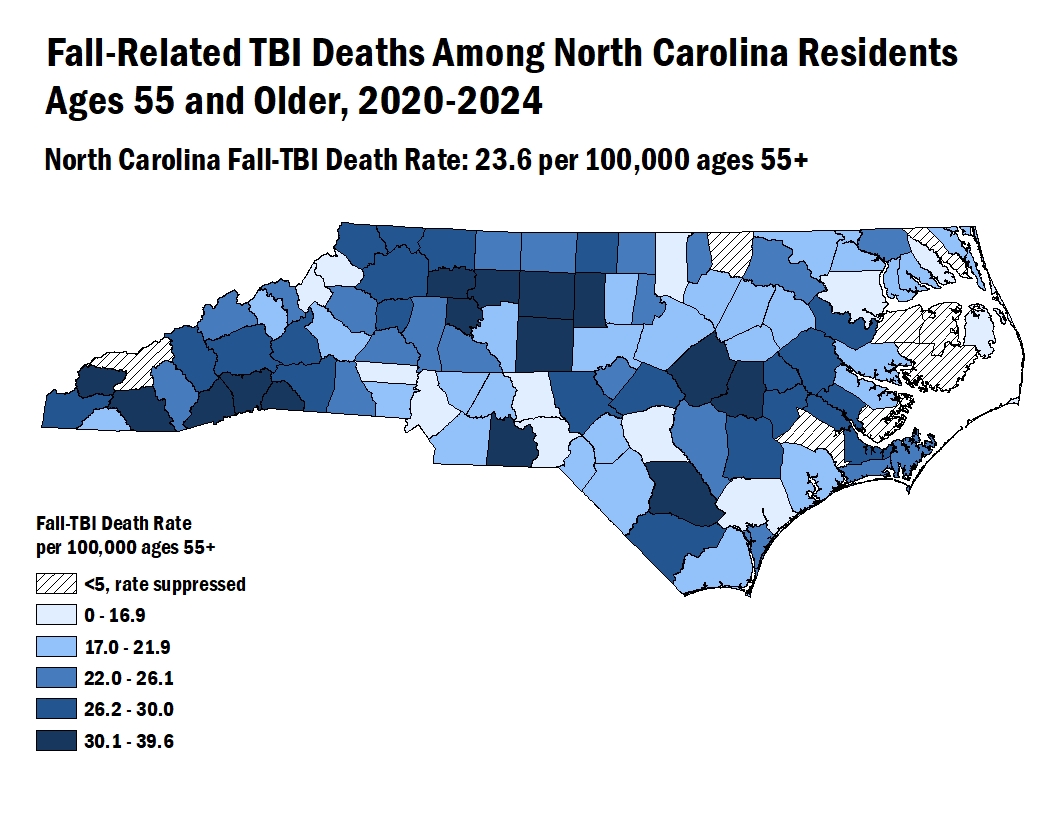
According to the North Carolina Department of Public Health (NCDPH), the fall-related Traumatic Brain Injury (TBI) death rate among North Carolina residents aged 55 and older was 23.6 per 100,000 from 2020 to 2024. This highlights the significant risk falls pose to older adults and the serious consequences of head injuries in this age group.
Types and Severity of Traumatic Brain Injuries
Not all traumatic brain injuries (TBIs) are the same. The type and severity of a TBI significantly impact a victim’s recovery, long-term prognosis, and the value of a legal claim.
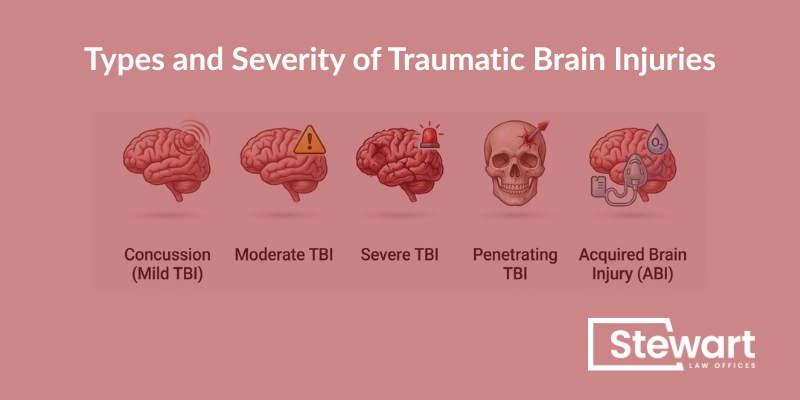
Concussion (Mild TBI)
A concussion is the most common type of traumatic brain injury. Although classified as “mild” on the Glasgow Coma Scale, it is a serious brain injury. Symptoms can include headaches, dizziness, cognitive fog, memory problems, sleep disturbances, light sensitivity, and mood changes. Some people develop post-concussion syndrome, where symptoms persist for months or even years.
Moderate TBI
Moderate traumatic brain injuries involve a longer loss of consciousness and more significant brain disruption. Victims often experience lasting difficulties with memory, concentration, processing speed, and emotional regulation. Many are unable to return to their previous job or level of independence.
Severe TBI
Severe traumatic brain injuries are life-altering and often catastrophic. They include injuries such as diffuse axonal injury, intracerebral hemorrhage, subdural hematoma, and epidural hematoma. These cases frequently require emergency neurosurgery, prolonged ICU stays, and years of rehabilitation. Permanent disabilities — including cognitive impairment, paralysis, speech difficulties, and loss of independence — are common.
Penetrating TBI
A penetrating brain injury occurs when an object pierces the skull and enters brain tissue. These injuries are among the most immediately life-threatening and often cause focal damage to specific areas of the brain. Outcomes vary widely depending on the location and extent of the injury.
Acquired Brain Injury (ABI)
Unlike traumatic brain injuries caused by external force, acquired brain injuries result from oxygen deprivation (hypoxic or anoxic injury). Common causes include cardiac arrest, near-drowning, or complications during surgery or anesthesia. These injuries can lead to profound cognitive disability or a persistent vegetative state and frequently arise in medical malpractice cases.
What to Do After a Suspected Head Injury in North Carolina
The steps you take in the hours and days after a head injury directly affect both your medical outcome and your legal rights:
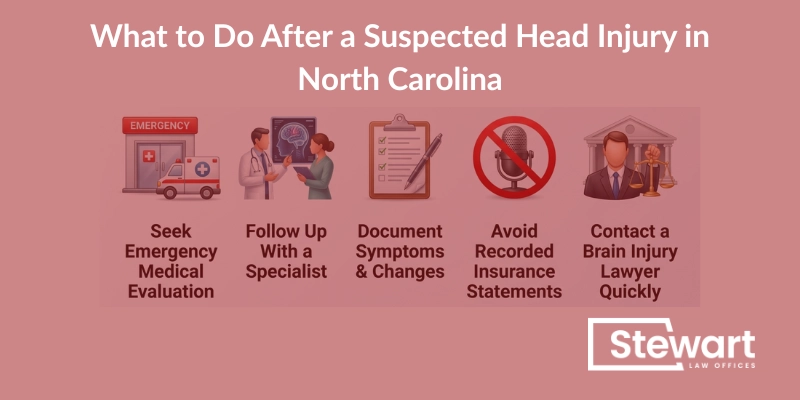
- Seek emergency medical evaluation immediately. Do not assume a head injury is minor simply because you feel relatively normal right after the impact. Many TBI symptoms, including subdural hematomas, develop hours or days later. An emergency evaluation creates the medical record that connects your injury to the accident.
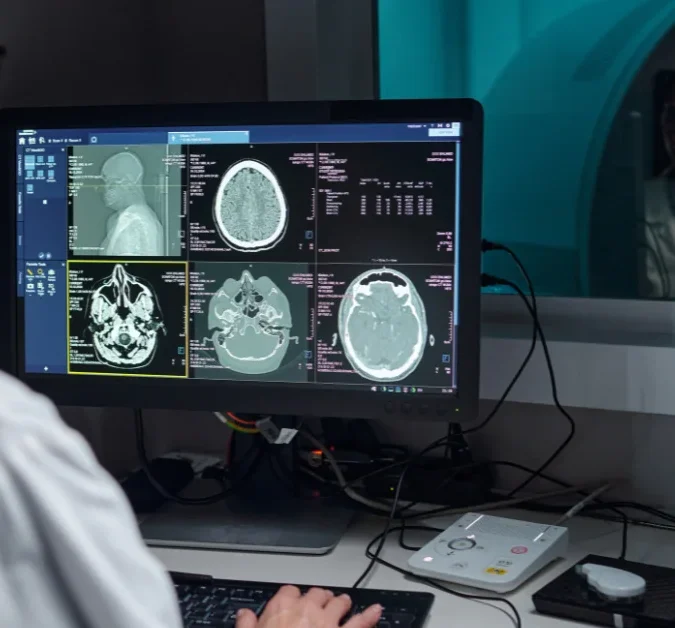
- Follow up with a neurologist or specialist. Emergency room evaluation is a starting point, not a complete assessment. A neurologist, neuropsychologist, or neurosurgeon can conduct the specialized testing needed to identify TBI damage that standard emergency imaging may not reveal.
- Document everything. Keep a detailed journal of all symptoms, cognitive, physical, emotional, and behavioral, as they appear and evolve. Note how your condition affects your ability to work, drive, sleep, and engage in relationships. This real-world documentation is powerful evidence in a TBI claim.
- Do not give recorded statements to any insurance company. After any accident involving a head injury, the at-fault party’s insurer may contact you quickly to take a recorded statement. Do not participate without first consulting a North Carolina traumatic brain injury attorney. Your statements can be used to minimize or deny your claim.
- Contact a North Carolina brain injury lawyer as soon as possible. Evidence disappears, medical records must be preserved, and the statute of limitations clock runs from the date of injury. The sooner your attorney can begin investigating and preserving evidence, the stronger your case will be.
How Stewart Law Offices Builds Your North Carolina TBI Case
Traumatic brain injury (TBI) cases in North Carolina are highly complex personal injury claims. Success demands sophisticated medical, economic, and legal expertise to deal with the tough contributory negligence laws and aggressive insurance defense. TBI claims require higher preparation due to greater stakes, complex damages, and stronger insurer resistance. Our North Carolina TBI attorneys systematically address these challenges:
- Comprehensive Documentation: We collaborate with a specialized network of qualified professionals, including neurologists, neuropsychologists, life care planners, and vocational economists. These experts thoroughly document the injury, establish its causal link to the accident, quantify all components of future care and economic loss, and effectively explain the profound human impact of the TBI to claims adjusters or a jury.
- Evidence Preservation and Analysis: We meticulously preserve and analyze all relevant evidence, such as police and incident reports, surveillance footage, vehicle black box data, comprehensive medical records, and employer records detailing the impact on work performance.
- Client Shielding and Advocacy: We manage all communication with the opposing insurance company, protecting our clients from the high-pressure tactics and premature settlement attempts that are common in serious TBI cases.
- Trial Readiness: When an insurer fails to present a genuinely fair settlement offer, we are fully prepared to advocate for you by taking your case to trial before a North Carolina jury.
Recovering from a traumatic brain injury is never easy. Medical bills, lost income, and the stress of dealing with insurance companies can feel overwhelming. Stewart Law Offices is here to shoulder that burden for you. Our attorneys combine decades of experience with a client-first approach, ensuring that every North Carolina resident receives the respect, guidance, and strong advocacy they deserve.
How Traumatic Brain Injuries Happen In North Carolina
According to the Centers for Disease Control and Prevention, there were approximately 214,110 TBI-related hospitalizations in the United States in 2020, and 69,473 TBI-related deaths in 2021, translating to more than 190 TBI-related deaths every single day. Traumatic brain injuries in North Carolina arise from a wide range of circumstances, many of them involving the negligence of another party.
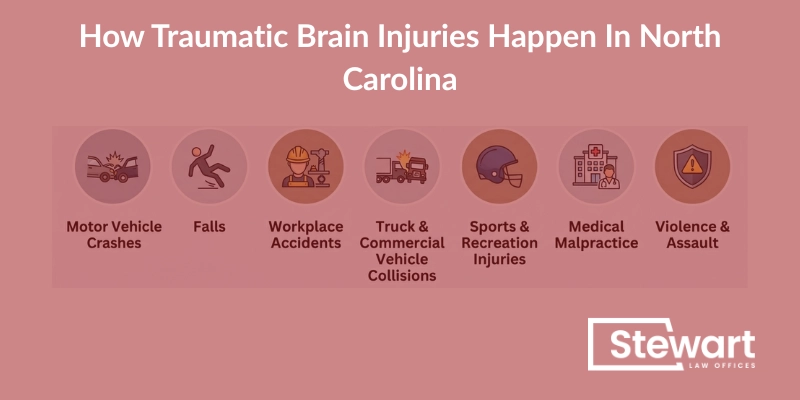
Motor Vehicle Crashes
Car crash, truck, and motorcycle accidents are among the leading causes of TBI in North Carolina. The rapid acceleration and deceleration forces involved in a collision, even one that does not result in direct head contact, can cause the brain to shift violently inside the skull. High-speed crashes on I-85, I-77, and other major corridors across the state produce some of the most severe TBI cases our attorneys handle.
Falls
Falls are the most common overall cause of TBI in the United States, particularly among children under five and adults over 75. In North Carolina, falls on poorly maintained property, at construction sites, in nursing facilities, and in retail environments are a consistent source of serious TBI claims. When a property owner’s negligence created the conditions that led to a fall, an uneven floor, a broken staircase railing, inadequate lighting, or a slippery surface left unmarked, our attorneys pursue premises liability claims to hold them accountable.
Workplace Accidents
Construction workers, warehouse employees, transportation workers, and those in manufacturing and industrial settings face elevated daily risks of head injury. Being struck by falling objects, being caught in or between equipment, or suffering a fall from an elevated surface can all produce traumatic brain injuries in the workplace. North Carolina workers who sustain a TBI on the job are entitled to workers’ compensation benefits, and, in some circumstances, may also have a personal injury claim against a third party whose negligence contributed to the accident.
Truck and Commercial Vehicle Collisions
Large commercial trucks traveling North Carolina’s major freight corridors impose catastrophic forces when they collide with passenger vehicles. The significant size and weight differential between a loaded commercial truck and a passenger car makes TBI an especially common outcome in these crashes. Trucking accident claims involve federal regulatory frameworks, multiple potentially liable parties, and evidence that must be preserved quickly.
Sports and Recreation Injuries
Contact sports, recreational activities, and youth athletics can all produce concussions and more serious TBIs. When a TBI arises from negligent supervision, improperly maintained equipment, or another party’s wrongful conduct, rather than ordinary competitive contact, there may be grounds for a legal claim.
Medical Malpractice
Errors during surgery, anesthesia administration, or post-operative monitoring can cause oxygen deprivation and other forms of brain injury. When a healthcare provider’s departure from the accepted standard of care results in TBI, a North Carolina traumatic brain injury lawyer can help evaluate whether a medical malpractice claim is viable.
Violence and Assault
When someone suffers a TBI as a result of a violent assault, they may have civil legal remedies against the perpetrator, in addition to any criminal prosecution that occurs. If the assault occurred on premises where the owner failed to provide reasonable security, a negligent security claim against that property owner may also be available.
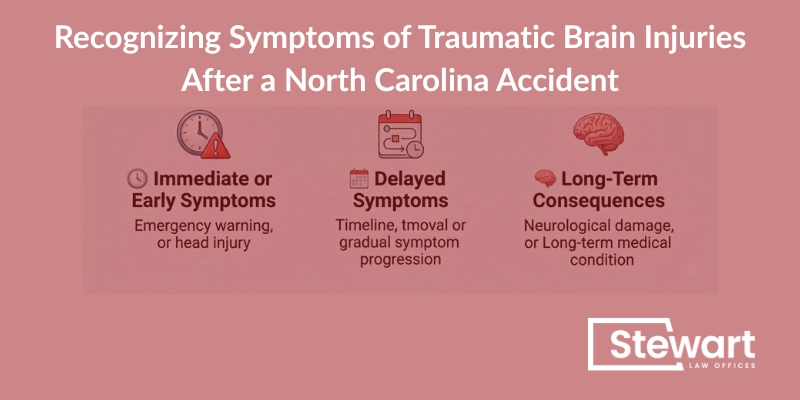
Recognizing Symptoms of Traumatic Brain Injuries After a North Carolina Accident
Traumatic Brain Injuries (TBIs) are uniquely dangerous because their full impact often isn’t immediately clear. For this reason, a medical evaluation is essential after any significant impact to the head or body, even if the injury initially seems minor.
TBI symptoms can manifest at different times and with varying degrees of severity:
- Immediate or Early Symptoms (Appearing within hours):
-
- Loss of consciousness
- Confusion and disorientation
- Severe headache
- Nausea and vomiting
- Slurred speech
- Unequal pupil size
- Seizures
- Delayed Symptoms (Developing over days or weeks):
- Persistent or worsening headaches
- Difficulty concentrating or retaining new information
- Uncharacteristic mood changes or emotional instability
- Sleep disturbances
- Sensitivity to light and noise
- Fatigue disproportionate to activity level
- Long-Term Consequences (Moderate to Severe TBI):
- Significant cognitive impairment (including memory loss, difficulty with reasoning, and problem-solving)
- Personality and behavioral changes
- Mental health disorders (depression, anxiety, PTSD)
- Loss of sensory or motor function
- Chronic pain
- Epilepsy
- In the most severe cases, a persistent vegetative state or death.
Because TBI symptoms can emerge gradually and may be mistakenly attributed to stress or tiredness, many victims delay seeking necessary medical treatment. This delay is risky because it can worsen the brain injury itself and significantly complicate any future legal claim.
If a head injury is even a possibility following an accident, a full neurological evaluation is strongly recommended. Seeking prompt medical documentation establishes the official record that your North Carolina traumatic brain injury lawyer will rely on to legally connect your injury to the incident and fully establish the extent of your losses.
Compensation Available in a North Carolina Traumatic Brain Injury Case
A traumatic brain injury (TBI) is one of the most serious and expensive injuries a person can suffer. The costs begin immediately with emergency transportation, hospitalization, diagnostic imaging, and neurosurgical care, and can continue for years, or even a lifetime, through ongoing rehabilitation, cognitive therapy, personal care assistance, and adaptive equipment.
In North Carolina, a successful TBI claim can recover compensation in two main categories:
- Economic damages cover documented, quantifiable injury costs, such as emergency/hospital care, neurosurgical/neurological treatment, inpatient/outpatient rehabilitation, neuropsychological testing, personal/attendant care, lost wages, and reduced earning capacity. Severe TBIs can cost millions for lifetime care, making thorough documentation and expert testimony on future needs vital for maximizing recovery.
- Non-economic damages cover intangible losses not seen in bills, such as physical pain, emotional distress, psychological trauma from a changed brain, loss of life enjoyment (activities, hobbies, relationships), and familial impact. North Carolina courts recognize these as valid, compensable losses.
For cases of reckless or willful conduct (e.g., drunk driving, gross negligence), punitive damages may also be sought. These damages punish the wrongdoer and deter similar behavior, not compensate you.
Contributory Negligence Rule in North Carolina Brain Injury Claims
North Carolina is one of only a few states that still follows the strict doctrine of pure contributory negligence. Under this rule, if the injured person is found to have contributed even slightly (as little as 1%) to the accident that caused their traumatic brain injury (TBI), they may be completely barred from recovering any compensation, no matter how severe the injury or how negligent the other party was.
TBI claims are difficult due to the rule of contributory negligence, which allows insurance and defense attorneys to aggressively seek plaintiff fault to dismiss the claim. An experienced North Carolina traumatic brain injury lawyer is vital to counter these arguments and protect your claim. They can also invoke the “last clear chance” doctrine, a key exception that permits recovery, even if the plaintiff was negligent, if the defendant failed to avoid harm despite having the final opportunity.
The Statute of Limitations for TBI Claims in North Carolina
Most personal injury claims in North Carolina, including those involving traumatic brain injury (TBI), must be filed within three years. Under N.C. Gen. Stat. § 1-52, the three-year period generally begins on the date the injury occurred or on the date the bodily harm becomes apparent, or reasonably should have become apparent to you (known as the discovery rule).
However, North Carolina also imposes a strict 10-year statute of repose. This means that no matter when the injury is discovered, you generally cannot bring a claim more than 10 years after the last negligent act or omission that caused the injury.
In wrongful death cases arising from a fatal TBI, the statute of limitations is two years from the date of death.
These deadlines are strict. Missing them usually means you lose the right to seek any compensation, regardless of how strong your case may be. Evidence can fade quickly, medical records must be preserved and reviewed, and expert witnesses (such as neurologists, neuropsychologists, life care planners, and vocational experts) need sufficient time to evaluate your injuries and prepare reports.
The sooner you contact an experienced North Carolina personal injury lawyer after your injury, the better protected your legal rights will be.

 Our team includes Elizabeth VonCannon, a North Carolina State Bar-licensed attorney with more than six years of dedicated experience representing individuals and families whose lives have been upended by traumatic brain injuries. Serving clients in Charlotte, throughout Mecklenburg County, and across the Piedmont region, Elizabeth brings a client-focused approach to every case, one built on listening first and advocating hard. When you come to Stewart Law Offices, you are not handed off to a case manager or processed through an assembly line. You work directly with attorneys who take the time to understand the full impact of your injury, communicate with you clearly at every stage, and treat your recovery as their personal mission.