
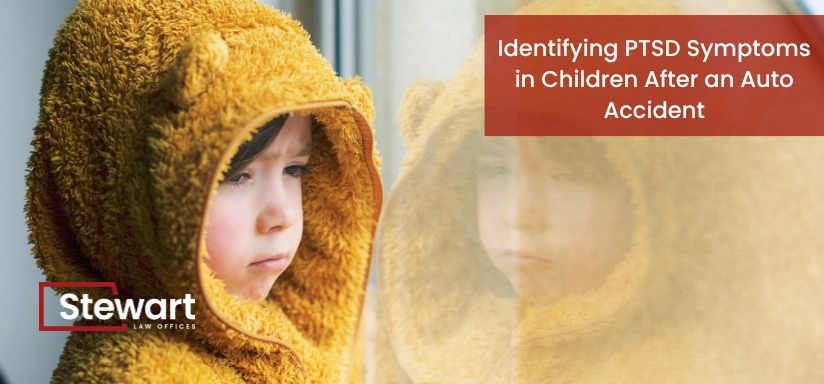
After a car accident involving your child, you may breathe a sigh of relief if your child has not suffered any physical injuries. However, auto accidents can cause severe emotional harm to children, including post-traumatic stress disorder (PTSD). Research shows that approximately one in three children involved in road traffic accidents develops PTSD, and many receive no psychological treatment at all. Parents should watch out for PTSD symptoms in children that may indicate ongoing mental trauma resulting from a car crash.
What Is PTSD?
The American Psychiatric Association defines post-traumatic stress disorder as a psychiatric disorder caused by experiencing or witnessing a traumatic event or series of events, such as a natural disaster, warzone, terrorist attack, assault, domestic violence, or accident. PTSD can occur when an individual experiences the traumatic event(s) as personally harmful or life-threatening. Symptoms of PTSD can have adverse physical, mental, emotional, and social effects.
People who have PTSD frequently experience intense or disturbing thoughts or feelings about the traumatic event. They may repeatedly relive the event through nightmares or flashbacks triggered by stimuli related to the event, such as getting into a car or driving past the location where a car accident occurred. As a result, they may avoid situations that remind them of the event. Intense anger, fear, or sadness may cause people to feel detached or become estranged from family and friends.
PTSD in children can look different from how it does in adults. Children often express distress through behavioral changes, sleep disturbances, or regression to earlier developmental stages, and they may not even connect their reactions to the accident.
Why Car Accidents Are Especially Traumatic for Children
A car crash is often a child’s first encounter with the idea that life can change in an instant. The sudden loud noises, physical impact, seeing a parent injured, or feeling trapped and out of control can leave deep and lasting emotional scars, even when no physical injuries occur. Factors that increase the likelihood of PTSD following a car accident include:
- The severity of the crash
- Witnessing injuries or death
- Being physically trapped in the vehicle
- Separation from a parent during or after the accident
- Pre-existing anxiety or other mental health conditions
- Lack of emotional support after the incident
Research underscores just how common this is. According to a study, approximately 35 percent of children involved in road traffic accidents developed PTSD, compared to just 3 percent of children who sustained sports injuries.
Child’s Symptoms of PTSD
Younger children may have difficulty expressing the emotions or mental distress they experience after a car crash. Children may not understand the intense thoughts they have about the accident or why they continue to have flashbacks or nightmares about it. Because children may emotionally or socially withdraw when suffering from PTSD, parents should familiarize themselves with the signs of PTSD in children, which may include the following:
Emotional and Behavioral Signs
Behavioral or emotional symptoms caused by PTSD in children include:
-
- Suddenly becoming very upset when exposed to stimuli that cause the child to remember or relive the crash, such as when getting into a vehicle or hearing loud sounds
- Irritability or frequent emotional outbursts
- Lack of positive emotions
- Intense, ongoing fear or sadness
- Emotional detachment or withdrawal from family and friends
- Regression to earlier developmental behaviors, such as bedwetting, thumb-sucking, clinginess, or separation anxiety in younger children
Physical Symptoms
PTSD can also cause various physical effects in children, such as:
- Difficulty falling or staying asleep
- Loss of appetite and weight loss
- Digestive issues
- Lethargy or chronic fatigue
Cognitive and Psychological Effects
Psychological effects of PTSD in children can include:
- Frequent nightmares or intrusive thoughts about the accident
- Refusing to talk about the accident or denying that the accident happened
- Consciously avoiding places, people, or other stimuli associated with the accident
- Becoming easily startled
- Constant or excessive worrying, unreasonable fears, or always looking out for potential threats or hazards (e.g., refusing to get into a car due to the chance they may get into another car crash)
When to Seek Professional Help
It is normal for children to feel shaken, scared, or upset in the days following a car accident. However, if symptoms persist beyond a few weeks or worsen over time, it may indicate PTSD. You should consult a pediatrician, child psychologist, or licensed therapist if:
- Your child is having frequent nightmares or significant sleep disturbances
- They are avoiding cars, certain routes, or any discussion of the accident
- Their academic performance or social relationships have declined
- They show signs of depression, anxiety, or emotional withdrawal
- You feel unable to help them cope on your own
Early intervention matters. Therapies such as trauma-focused cognitive-behavioral therapy (TF-CBT) and play therapy have strong evidence behind them and can significantly improve outcomes for children with post-accident PTSD.
How a Car Accident Lawyer Can Help
If your child has suffered symptoms of PTSD after a car accident, let an experienced South Carolina car accident attorney help your family pursue accountability and financial recovery for the emotional harm your child has endured. An attorney can investigate the crash to identify who caused it and is responsible for compensating you and your child for the harm they caused. An attorney can also gather medical evidence needed to prove that your child has developed PTSD due to the accident and advocate for your child’s right to a fair financial recovery.
Contact Stewart Law Offices today for a free, no-obligation consultation to discuss your legal options for pursuing a compensation claim for your child’s post-traumatic stress disorder caused by a car accident.