
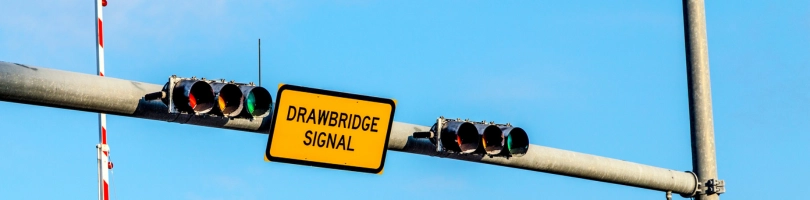
Red and Yellow Light Accidents in Rock Hill, SC
Legally Reviewed by the Stewart Law Offices Content Team: Sep 20, 2026
Intersections are among the most dangerous places on any road, and crashes caused by drivers who run red lights or speed through yellow lights produce some of the most severe injuries in all of traffic accident litigation. When a vehicle enters an intersection against a red signal, the impact it creates is typically a high-speed side collision against a vehicle that had every legal right to be moving. There is often no warning, no time to brake, and no protective structure between the door panel and the striking vehicle.
 At Stewart Law Offices, every Rock Hill and York County resident who walks through our doors receives the direct attention of Brent Stewart, a personal injury attorney with more than 30 years of experience fighting for injured people throughout South Carolina. As a member of the South Carolina Association of Justice, Brent brings real commitment to the side of injury victims rather than the insurers seeking to minimize what they pay out.
Our firm’s roots in the Rock Hill community run deep, and we have spent decades helping York County families secure the compensation they need after a serious crash. If you were injured in a red-light or yellow-light accident in Rock Hill, contact us today for a free, confidential consultation.
South Carolina Traffic Signal Laws
Every driver in Rock Hill, whether on Dave Lyle Boulevard, Cherry Road, Celanese Road, or any other signalized roadway in York County, is bound by South Carolina’s traffic signal statutes.
Under S.C. Code § 56-5-970, a driver facing a circular red signal must stop before entering the intersection and remain stopped until a green signal is shown. Running a red light violates this specific statutory requirement. That violation is direct evidence of negligence in any civil claim brought by a person injured in the resulting crash.
The yellow light creates its own legal obligations. Under the same statute, a yellow signal serves as a warning that the signal is changing to red. A driver who accelerates to clear an intersection on yellow rather than slowing to stop has made a deliberate choice to prioritize speed over safety. When that choice results in a crash, the driver who ran the yellow light may bear full or partial liability for the resulting injuries, depending on the timing and circumstances.
South Carolina law (S.C. Code § 56-5-3130) also requires drivers to yield to pedestrians in crosswalks. A driver who strikes a pedestrian crossing on a “Walk” signal or within a marked or unmarked crosswalk violates both the traffic signal statute and the separate duty to yield to pedestrians.
Why Red and Yellow Light Crashes Produce Severe Injuries
The physics of a red-light crash explains why these collisions produce such serious harm. A driver entering an intersection against a red light typically does so at or near the speed at which they were traveling on the roadway, because they made no attempt to stop. The vehicle with the legal right of way was moving through the intersection on a green signal, at or near its travel speed.
The result is a broadside or T-bone collision where both vehicles are moving at the time of impact, and the struck vehicle’s occupants are exposed to lateral forces for which the vehicle’s side structure provides limited protection compared to the front and rear crush zones. There is no crumple zone, no frontal airbag deployment, and in many cases, no warning whatsoever before impact.
When the red light runner is also speeding, an additional documented risk factor per IIHS data, the forces involved are even more severe. In these crashes, the combined speed of both vehicles at the point of contact determines the total energy the occupants must absorb.
Types of Injuries Common in Rock Hill Red Light Crashes
Because T-bone and broadside impacts produce direct lateral forces against the vehicle’s occupants, the injuries in these crashes are frequently severe and often permanent.
Traumatic brain injuries occur when the skull is struck directly by an intruding door panel or B-pillar, or when the rapid lateral deceleration causes the brain to impact the inner skull wall. Even a side curtain airbag deployment does not fully protect against the forces involved in a high-speed broadside impact.
Spinal cord injuries and vertebral fractures result from the sudden lateral loading imposed on the spine. Cervical and thoracic fractures are documented outcomes of T-bone crashes.
Internal organ damage from blunt force to the torso is a documented risk in lateral impacts, where the door structure transmits force directly to the body before the airbag system can fully deploy.
Soft tissue injuries affecting the muscles, tendons, and ligaments of the neck, shoulder, and spine are among the most common outcomes and frequently produce lasting chronic pain.
Psychological injuries, including PTSD, are well-documented consequences of sudden, violent intersection crashes where victims had no warning or opportunity to prepare for impact.
Proving a Red or Yellow Light Violation in a Rock Hill Claim
Because the driver who ran a red light is unlikely to admit it voluntarily, proving the violation requires building an evidentiary case from multiple sources.
Traffic camera footage at intersections along busy Rock Hill corridors, where cameras are installed for signal control, may have captured the violation. Our attorneys request this footage immediately, as many systems overwrite footage within days.
Witness testimony from drivers and passengers in nearby vehicles who observed the light status and the violating driver’s behavior provides direct evidence of the signal violation.
The official police accident report may include the investigating officer’s observations and any citations issued for failure to obey a traffic control device.
Event data recorder information from the vehicle’s documents includes speed, braking, and steering inputs in the seconds before the crash. A vehicle traveling at road speed with no braking before the impact point is consistent with failing to stop for a red signal.
Dashcam recordings from other vehicles in the area of the intersection may have captured the light status and the positions of both vehicles.
Compensation Available to Red and Yellow Light Crash Victims in Rock Hill
South Carolina law allows red-light and yellow-light accident victims to recover all economic and non-economic losses caused by the crash.
- Economic losses include all past and future medical expenses, lost wages during recovery, reduced future earning capacity when permanent injuries affect employment, and property damage.
- Non-economic losses cover physical pain, emotional distress, PTSD, permanent scarring and disfigurement, loss of enjoyment of life, and loss of consortium for spouses whose relationships were affected by the victim’s injuries.
- Punitive damages are available when the driver’s conduct was willful, reckless, or wanton, capped at three times compensatory damages or 500,000 dollars, whichever is greater, with exceptions for conduct involving alcohol or drug impairment by the defendant.
Who May Be At Fault In A Red Or Yellow Light Crash
Fault in red or yellow light crashes often rests with the driver who ignored the signal, but each crash requires a careful look at the facts. Potential responsible parties include:
- A driver who ran a red light or accelerated through a stale yellow instead of stopping
- Motorists who followed too closely and rear-ended a vehicle that stopped appropriately for a yellow or red signal
- Drivers who made illegal turns against the signal or blocked the intersection
- In rare cases, entities responsible for signal timing or maintenance, if malfunctioning signals contributed to the crash.
South Carolina crash data show that failure to yield and traffic signal-related issues are the primary contributing factors in many intersection accidents, which means insurers and courts regularly see these types of cases. A Rock Hill car accident lawyer can gather the necessary evidence to show which driver or entity failed to follow the rules and should be held accountable.
The Filing Deadline for Rock Hill Red Light Accident Claims
Under SC Code § 15-3-530, the statute of limitations for personal injury claims in South Carolina is 3 years from the date of the crash. Traffic camera and intersection surveillance footage is often overwritten within 24 to 72 hours. Contacting our firm as soon as possible ensures that this evidence is preserved before it is permanently lost.
Talk to a Rock Hill Red and Yellow Light Accident Lawyer
Stewart Law Offices represents red-light and yellow-light accident victims throughout Rock Hill and York County on a contingency-fee basis. You pay no attorney fees unless we recover compensation for you. Call us today or contact us online to schedule your free, confidential consultation.
Visit Our Red and Yellow Light Lawyers on Ebenezer Road in Rock Hill, SC
FAQs About Red and Yellow Light Accidents in Rock Hill, SC Claims
SC Code Section 56-5-970 requires a driver facing a circular red signal to stop before entering the intersection and remain stopped until a green signal is shown. Violating this specific statutory requirement is direct evidence of negligence in a civil lawsuit. Under the negligence per se doctrine, a statutory violation can establish the breach-of-duty element of a negligence claim without requiring the plaintiff to separately argue that a reasonable person would not have acted that way, strengthening the foundation of the injury claim.
Rear-end crashes benefit from both vehicles’ crumple zones and typically involve an energy-absorbing gradient from rear bumper through the trunk before occupants are affected. In a T-bone crash produced by a red light runner, the struck vehicle’s occupants are exposed to direct lateral impact forces through the side door and B-pillar, which provide significantly less structural protection than the front or rear of the vehicle. There is no crumple zone on the side, side curtain airbags are present in some but not all vehicles, and there is often no advance warning allowing occupants to brace.
Traffic camera footage from intersection signal control systems, business surveillance cameras facing the intersection, and dashcam recordings from nearby vehicles are the most time-sensitive sources of evidence. Signal control system cameras are maintained by local transportation departments, and many overwrite stored footage within 24 to 72 hours of recording unless a formal preservation demand is received. Business surveillance cameras operate on similar retention cycles. Our attorneys send formal preservation demands to the responsible parties on the day we are retained to prevent this footage from being permanently lost before it can be used to document the signal violation.
Under SC Code Section 15-38-15, a victim’s compensation is reduced proportionally by their assigned fault percentage and eliminated only when their fault reaches 51 percent or more. When both drivers dispute the signal timing, our attorneys resolve the dispute through objective evidence rather than credibility contests. Signal timing data obtained from the city’s traffic control system, event data recorder information showing each vehicle’s speed and braking behavior approaching the intersection, and witness testimony about the light status all establish an objective record that accurately reflects what happened, regardless of what each driver claims.