
Charlotte Slip and Fall Attorneys
Legally Reviewed by the Stewart Law Offices Content Team: Sep 19, 2026
A fall can change your life. If the wrong part of your body lands against a sharp or hard surface, you could suffer serious injuries. You will likely face enormous medical bills and be forced to take time off work, worsening the financial burden. If your fall resulted from a dangerous condition, such as a slick surface or uneven flooring, you may seek compensation through a personal injury claim.
At Stewart Law Offices, our Charlotte slip and fall lawyers are committed to helping our clients recover the compensation they need to cover their losses and move forward. We have been successfully representing personal injury victims for over 30 years, and, with over $35 million recovered, our results speak for themselves.* We want to make a difference in your life during this challenging time and will make every effort to make the legal process as efficient and painless as possible. One of our attorneys can meet with you at your home or in the hospital, and we will be available 24/7 to answer your questions. Our team is also sensitive to the financial challenges you are undoubtedly experiencing, which is why you pay us nothing unless we secure a favorable settlement or verdict.
 Attorney Elizabeth VonCannon is licensed with the North Carolina State Bar and has more than six years of experience handling personal injury cases, including slip and fall claims. She regularly works with clients in Charlotte and throughout Mecklenburg County, taking the time to understand how an injury has affected their daily lives. Your case will be handled carefully, you will feel comfortable throughout the process, and you can directly talk to your lawyer whenever you need guidance or answers.
If you recently slipped and fell but are unsure whether you have a case, turn to the experienced Charlotte slip and fall lawyers at Stewart Law Offices. We provide a free legal consultation to discuss the injury and whether you may have a viable slip and fall injury case.
The Growing Crisis of Fall‑Related Injuries and Deaths in Charlotte
Falls are one of the leading causes of injury and death in the United States, a problem that is growing in scale every year and that affects people of all ages in communities across Charlotte and Mecklenburg County.
Over 14 million, or 1 in 4 older adults, report falling every year in the United States. About 37 percent of those who fall reported an injury that required medical treatment or restricted their activity for at least one day, resulting in an estimated nine million fall injuries annually.
In 2024, North Carolina recorded 1,985 unintentional fall deaths, making falls the second leading cause of injury-related death in the state. Approximately 90% of these fall deaths occurred among adults aged 65 and older. Falls also resulted in 29,975 hospitalizations and a staggering 284,874 emergency department visits across the state.
Fall-related deaths in North Carolina have increased by 69% over the last 10 years (2015–2024), highlighting a serious and growing public health concern, particularly for older adults.
These numbers are national, but they reflect a daily reality in Charlotte. The city’s dense mix of commercial corridors, retail centers, hospitality venues, apartment complexes, and construction activity creates consistent opportunities for dangerous property conditions and preventable fall injuries across every neighborhood in Mecklenburg County.

Where Slip and Fall Accidents Happen in Charlotte
In Charlotte, slip and fall accidents occur across a wide range of settings. The location of your fall is important because it helps determine who owned or controlled the property, who was responsible for maintaining it, and against whom a claim can be brought.
- Retail stores and grocery stores: Spills, freshly mopped floors without adequate warning, fallen merchandise, and worn floor transitions are among the most frequent hazards in these environments.
- Restaurants and food and beverage establishments: Consistent foot traffic through spaces where wet floors, uneven surfaces, and poor lighting create foreseeable fall risks.
- Parking lots and sidewalks: Cracked pavement, potholes, uneven concrete panels, and unmarked curb transitions regularly cause pedestrian falls. Property owners, not just government entities, are responsible for sidewalks and walkways immediately adjacent to their buildings.
- Apartment complexes and residential rental properties: Stairwells, parking areas, hallways, and shared outdoor spaces must be properly maintained. Broken railings, deteriorating stairs, and inadequate common‑area lighting are frequent sources of claims.
- Hotels and hospitality properties: Pool decks, lobby floors, exterior walkways, and hotel room bathrooms create foreseeable fall hazards that owners are obligated to address.
- Construction sites: Open excavations, debris‑covered walkways, and inadequate fall protection expose workers and members of the public to fall hazards.
- Hospitals and healthcare facilities: Commercial properties owe a duty of care to patients, visitors, and staff. Falls on healthcare property can give rise to both premises liability claims and, in some circumstances, medical malpractice claims.
Common Slip and Fall Injuries in Charlotte
Every slip and fall injury can potentially disrupt the victim’s life significantly. However, some injuries can be so severe that they require months or years of recovery. The affected individual may face overwhelming medical bills and permanent disability. The experienced Charlotte, North Carolina, slip and fall lawyers at Stewart Law Offices can help you seek compensation for these losses.
Our team has provided legal services for those who have sustained injuries such as:
- Spinal cord injuries (SCIs)
- Traumatic brain injuries (TBIs) and other head injuries
- Fractured or dislocated bones
- Puncture wounds and lacerations
- Organ damage or internal bleeding
- Back, neck, and shoulder injuries
- Severe sprains and strains
In the most extreme cases, a slip and fall accident can be fatal. If you have lost a loved one in such an accident, our slip and fall attorneys can support you in filing a wrongful death claim against the at-fault party.
Common Causes of Slips and Falls
Slip and fall incidents can occur for many reasons, including:
- Slippery surfaces – Leaks, spills, and recently cleaned floors can be hazardous, particularly if the site lacks warning signs.
- Uneven flooring – Uneven sidewalks, loose floorboards, and cracked tiles can cause people to lose their balance and fall.
- Inadequate lighting – When hallways, stairwells, and parking lots have poor lighting, individuals cannot see potential hazards.
- Weak handrails – If handrails on platforms or stairs are weak or missing, individuals may lack the support they require to keep themselves upright.
- Cluttered walkways – When cables, debris, or boxes are left in walkways, they can quickly become tripping hazards.
- Loose carpeting – Carpeting must be securely fastened to the floor. Otherwise, it can cause individuals to lose their footing and fall.
- Broken or missing stair nosings – The leading edge of a stair tread that is broken, worn, or of a color that blends with the adjacent surface creates a serious trip hazard, particularly on commercial stairways.
- Ice and snow accumulation – During winter weather events in Charlotte, property owners have a duty to address hazardous ice and snow accumulation on walkways, parking areas, and building entrances within a reasonable time after conditions develop.
If you were injured by any of these dangerous conditions on someone else’s property, an experienced slip and fall lawyer from our law firm can gather evidence to prove liability. For more on how seasonal hazards increase these risks, read our guide on holiday slip and fall accidents.
Understanding Premises Liability Law in Slip and Fall Cases
The goal of a slip and fall claim is to help a victim recover compensation for injuries and other losses. However, a person is not automatically entitled to financial compensation when they slip and fall on another person’s property. Prevailing in a slip and fall case requires an understanding of premises liability laws, which govern when a property owner is legally held responsible for injuries that occur on their property.
After reviewing the details of what happened, our Charlotte slip and fall attorneys take the time to explain your rights and legal options. This includes guidance from attorney Christian Gerencir, who is licensed with the North Carolina State Bar and has more than eight years of experience handling personal injury matters.
To successfully bring a slip and fall claim, you must prove:
- The property owner owed you a duty of care. Generally, a property owner owes a duty of care to lawful visitors, including invited guests, patrons, and customers. When you visit a store or are invited into a friend’s home, for example, the property owners typically owe you a duty of reasonable care to keep the premises safe. A property may not owe a duty of care to someone who is trespassing.
- A dangerous defect existed on the property. Examples of dangerous defects that can trigger premises liability include slick surfaces, uneven flooring, loose railings, and inadequate lighting.
- The property owner knew or should have reasonably known about the dangerous defect. For a property owner to be held liable, they must have been aware of the defect. For example, if a spill in a grocery store occurs and someone slips immediately after the defect appears, it would be difficult to claim the property owner was aware of the issue. A property owner may become liable for defects they were not directly aware of if they should have been aware of the problem. If a spill occurs in a grocery store and the slick surface is allowed to stand for hours, for example, a case could be made that the property owner should have been conducting regular cleanings and inspections and, therefore, should have been aware of the spill.
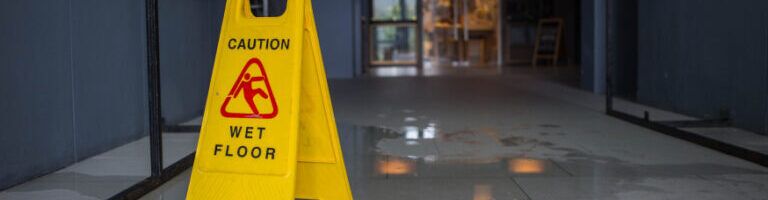
- The property owner did not address or resolve the dangerous defect. Keep in mind that not all defects can be entirely resolved as soon as they are discovered. A property owner may not be liable if they took adequate steps to warn visitors about a defect. In the example of a grocery store spill, placing a bright, unambiguous “warning: wet floor” sign would likely be considered sufficient in the eyes of the law.
- You were injured because of the dangerous defect. Simply discovering the existence of a dangerous defect does not mean you have a case. You must be able to demonstrate that the defect directly caused your injuries.
What to Do After a Slip and Fall Accident in Charlotte
The steps you take immediately following a fall on someone else’s property can make a significant difference in your ability to pursue compensation. Here is what to do:
- Report the accident immediately. Inform the property owner, store manager, or on-site supervisor before you leave. Ask them to complete a written incident report and request a copy. If they refuse, note the name and title of the person you spoke with.
- Photograph everything. Use your phone to document the exact condition that caused your fall, the wet floor, broken step, uneven pavement, or other hazard. Photograph the area from multiple angles, any warning signs that were or were not present, and your visible injuries. Do this before anything is cleaned up or repaired.
- Collect witness information. If anyone saw your fall, get their name and phone number before leaving the scene. Eyewitness accounts are powerful evidence when the property owner disputes your account of what happened.
- Seek medical treatment promptly. Go to an emergency room, urgent care, or your doctor even if you feel you may not be seriously injured. Many serious injuries, including concussions, internal bleeding, and spinal damage, are not immediately apparent. A medical evaluation creates the documented record that connects your injuries to the fall.
- Preserve your clothing and footwear. The shoes and clothing you were wearing at the time of the fall may be relevant evidence. Store them as-is and do not clean or discard them.
- Do not give a recorded statement to the property owner’s insurance company. Before speaking to any representative of the property owner’s insurer, contact a Charlotte slip and fall attorney. These adjusters are trained to ask questions in ways designed to minimize or deny your claim.
- Contact a Charlotte slip and fall lawyer without delay. Surveillance footage is routinely overwritten within days. Hazardous conditions are often repaired immediately after an incident. The sooner your attorney can begin preserving evidence, the better protected your claim will be.
Evidence That Supports a Charlotte Slip and Fall Claim
Building a successful slip and fall case depends on the quality and completeness of the evidence gathered. Key evidence in a Charlotte premises liability claim includes:
- Incident reports: The written report completed by the property’s management at the time of the fall is a critical piece of evidence. If it was not completed, your attorney can request it through the discovery process.
- Surveillance footage: Many Charlotte commercial properties and public spaces have security cameras. This footage can show the hazardous condition, how long it existed before your fall, and the absence of warning signs. This footage is often overwritten within 24 to 72 hours, making immediate legal action essential.
- Maintenance and inspection records: These records can establish whether the property owner had a reasonable inspection schedule in place and whether they were aware of recurring hazards. Your attorney can subpoena these records through the litigation process.
- Prior complaint and incident records: Evidence that other customers or visitors had previously complained about or fallen due to the same hazard is powerful proof of constructive notice and a pattern of negligence.
- Photographs and physical evidence: Photos of the exact condition that caused the fall, taken as close to the time of the incident as possible, are among the most persuasive evidence available.
- Medical records: A complete medical record linking your injuries to the fall, with documentation of all treatment, diagnoses, and projected future care needs, is the foundation of your damages claim.
- Expert testimony: In complex cases, premises safety experts can evaluate the property owner’s maintenance practices against professional and industry standards, and vocational or economic experts can quantify the impact of your injuries on your future earning capacity.
Recovering Damages Through a Charlotte Slip and Fall Claim
A slip and fall claim allows a victim to obtain compensation for economic and non-economic damages from the at-fault party. Economic damages, also called “special compensatory damages,” are quantifiable, while non-economic damages, also referred to as “general compensatory damages,” are not. We can help you understand what your claim may be worth, and we fight to maximize what you recover.
Our Charlotte slip and fall lawyers will work to secure compensation for all losses, including:
- Past, current, and future medical expenses
- Lost wages
- Reduced earning capacity
- Property damage (such as a broken phone, watch, or jewelry)
- Physical pain and suffering
- Emotional distress
- Loss of consortium
Visit Our Slip and Fall Attorneys in Charlotte, NC
Can I Recover Compensation If I Am Partially at Fault for the Accident?
North Carolina is one of only four states that follows the principle of contributory negligence. Under this rule, a person who has suffered slip and fall injuries is ineligible to recover compensation if they are partially at fault for their losses. As such, the other party’s insurance company may do everything it can to pin some of the blame on you. Working with a skilled North Carolina slip and fall attorney can help demonstrate that the other party is entirely at fault, thus protecting your right to compensation.
When Should I Hire a Charlotte Slip and Fall Lawyer?
You should contact a Charlotte slip and fall attorney as soon as possible after your accident, ideally before speaking to the property owner’s insurance company. Here is why timing matters:
- Evidence disappears rapidly. Surveillance footage can be overwritten within 24 to 72 hours. Hazardous conditions are routinely corrected by property owners immediately after an incident. The sooner your attorney sends evidence preservation demands, the more complete your evidentiary record will be.
- Insurance companies move quickly. The property owner’s insurer may contact you within days, and sometimes hours, of your fall to offer a settlement or take a recorded statement. Having legal representation before these interactions ensures you are protected.
- The statute of limitations clock is running. Under N.C. Gen. Stat. § 1-52, you have three years from the date of your fall to file a personal injury lawsuit. While three years may sound like ample time, building a thorough case, retaining experts, and completing the discovery process takes time. Waiting until the deadline is near can compromise the quality of your case.
What Is the Deadline to File a Slip and Fall Lawsuit In Charlotte
In North Carolina, you have only three years from the date of the slip and fall to bring a personal injury claim. You will be barred from taking legal action and recovering compensation if you miss this deadline, which is why it is essential to get legal advice as soon as possible after an accident.
Should someone suffer fatal injuries due to a slip and fall, the personal representative of the deceased’s estate has the right to file a wrongful death claim for the benefit of the victim’s surviving loved ones. In these cases, the personal representative will have two years from the date of death to file a lawsuit. Our compassionate Charlotte wrongful death lawyers will fight for the justice of your loved one.
How Our Charlotte Slip and Fall Lawyers Can Help You
At Stewart Law Offices, our Charlotte slip and fall attorneys bring more than legal knowledge to your case — we bring investigative resources, expert relationships, and the trial experience needed to hold negligent property owners accountable. Here is what we do for our clients:
- Rapid evidence preservation. We immediately send preservation notices to property owners demanding that surveillance footage, maintenance logs, inspection records, prior incident reports, and all related documentation be retained before it is altered or destroyed.
- Thorough investigation. We reconstruct the facts of your fall, when the hazard arose, how long it existed, whether it was reported, and what the property owner’s response was, to build the strongest possible case for notice and liability.
- Expert consultation. In serious cases, we retain premises safety experts who can evaluate the property owner’s maintenance practices against industry standards, and medical experts who document the full extent and future cost of your injuries.
- Contributory negligence defense. We build your case from the outset to establish the property owner’s exclusive responsibility, anticipating and rebutting any argument that you contributed to your fall.
- Insurance negotiation and litigation. We handle all communications with the property owner’s insurer, push back against inadequate offers, and take every case as far as necessary, including trial, to achieve a fair result for our clients.
Contact Our Charlotte Slip and Fall Injury Lawyers for a Free Case Review
The physical, financial, and emotional repercussions of slip and fall accidents can be devastating. However, if a property owner’s negligence is responsible for your injuries, it is essential to remember that you have a right to seek compensation for your losses.
The skilled Charlotte slip and fall attorneys at Stewart Law Offices have been successfully fighting for injured individuals for over 30 years. Our recent results include a $1 million award for a slip and fall injury*, so we know what it takes to achieve the outcome you deserve. Call us today or contact us online for a free consultation with a slip and fall accident attorney in Charlotte, NC.
FAQs About Charlotte Slip and Fall Injury Claims
North Carolina’s pure contributory negligence doctrine means that if a property owner’s insurer can establish that you contributed in any degree to your fall, even one percent, your entire claim may be barred. In slip and fall cases, insurers typically argue that the victim was distracted by a phone, not watching where they were walking, wearing inappropriate footwear, or ignored an obvious hazard or posted warning. Defeating these arguments requires building a strong, well-documented case establishing the property owner’s exclusive negligence from the very beginning of your case, before the insurer’s narrative takes hold.
Actual notice means the property owner directly knew about the dangerous condition, for example, an employee witnessed a spill and did not address it. Constructive notice means the hazard existed long enough that a property owner exercising reasonable care through regular inspection should have discovered and corrected it. Proving constructive notice typically involves evidence of how long the hazard existed, the property’s inspection schedule, prior complaints about the same condition, and whether the defect was recurring. An attorney subpoenas maintenance records, surveillance footage, and employee training documents to establish constructive notice when direct evidence is unavailable.
Under state law, a visitor’s classification, invitee, licensee, or trespasser, dictates the specific duty of care owed by the property owner:
- Invitees: This group includes hotel guests, restaurant patrons, and retail shoppers. They receive the highest protection, requiring owners to warn of known dangers and perform regular inspections for hidden hazards.
- Licensees: Social guests fall into this category. Owners must notify them of any known concealed risks on the property.
- Trespassers: Unauthorized visitors are afforded only a minimal duty of care.
Because most slip and fall victims are considered invitees, they often have a strong basis for a claim due to the extensive legal obligations placed on the property owner.