
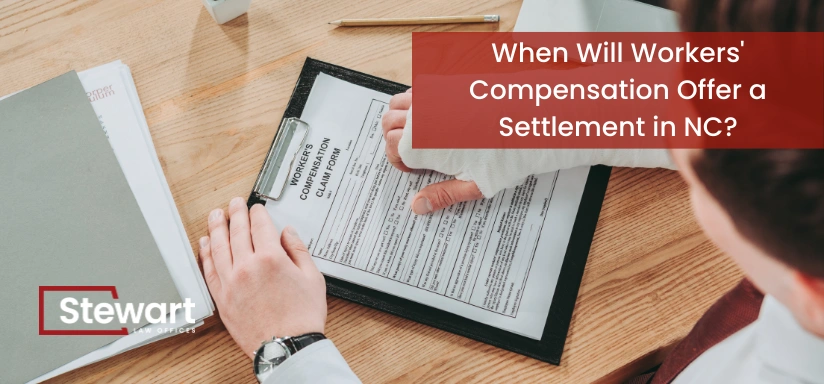
You’ve reported your accident, seen the doctor the insurance company picked, and maybe even started getting weekly checks. But what you really want to know is when workers’ comp will offer a settlement so you can plan your future. There is no automatic deadline in North Carolina law.
Instead, settlement offers usually show up when the insurance company believes it understands your medical condition, your long-term earning capacity, and what might happen if the case goes to a hearing at the North Carolina Industrial Commission (NCIC). From there, it’s a calculated business decision on their side, and a major life decision on yours.
Why Workers’ Comp Insurance Companies Offer Settlement Offers
Insurance carriers prefer settlements because they close the claim and eliminate future uncertainty. Once you sign a settlement agreement approved by the North Carolina Industrial Commission, the insurance company knows exactly what they’ll pay and can close their file.
For injured workers, settlements can provide immediate financial relief and certainty. However, accepting a settlement means giving up certain rights, so it’s crucial to understand what you’re agreeing to before signing anything.
What Influences the Timing of a Settlement Offer?
Reaching Maximum Medical Improvement (MMI) is one of the most important triggers for settlement talks. MMI does not necessarily mean you are fully healed; it means your condition has plateaued, and further medical treatment is unlikely to improve your overall health or function significantly. At this point, your physician may assign a permanent impairment rating, which is crucial for valuing your claim and negotiating a fair settlement.
Because insurers want to know the full extent of your medical needs and future expenses, they rarely offer settlements before you hit MMI. Settlement offers before this milestone are more likely if both sides agree on the extent of injury and future care needs.
When NC Workers’ Comp Settlement Offers Commonly Occur
There are two broad periods when North Carolina workers’ comp settlement offers typically happen:
1. After Reaching MMI
Once your doctor determines you’ve reached MMI, negotiations often begin because the insurer can better calculate the total costs of your claim, including future medical care, disability payments, and lost wages.
2. During Mediation or Just Before a Hearing
In North Carolina, mediations are common before formal hearings with the North Carolina Industrial Commission, and settlement offers often occur in these negotiations. An insurer may prefer to settle during mediation rather than face the uncertainty of a hearing outcome. Many cases settle at or shortly after mediation because the risk of a larger award, or no award, at hearing motivates both sides to compromise.
These are the typical settlement pressure points, but negotiations can begin earlier or later depending on case complexity.
Types of Workers’ Comp Settlements Available in North Carolina
North Carolina primarily uses two types of workers’ compensation settlements:
- Form Agreements: These address statutorily due disability compensation, do not close your case outright, and allow medical benefits to continue after your last compensation payment. They can be reopened if your condition changes significantly within two years.
- Compromise Settlement Agreements (Clinchers): These settle all issues completely and permanently close your claim, ending all wage replacement and medical benefits. They require approval by the North Carolina Industrial Commission.
Understanding which type of settlement applies to your situation is essential in deciding whether to accept an offer.
How Much Workers’ Comp Usually Pays in NC
North Carolina workers’ compensation pays two-thirds (66.67%) of your average weekly wage if you’re unable to work. As of 2025, the maximum weekly benefit is $1,380, according to the NC Office of State Human Resources. These benefits aren’t subject to state or federal income taxes.
Settlement amounts vary widely. The severity of your injury, your pre-injury wages, the extent of any permanent impairment, your future medical needs, and your ability to return to work all influence the settlement value. Cases with legal representation typically result in higher settlements because experienced attorneys accurately calculate claim values.
How to Evaluate Whether a Workers’ Comp Settlement Offer Is Fair
When evaluating a settlement offer, consider whether it adequately covers:
- Past and future medical expenses related to your work injury
- Lost wages and any long-term wage replacement needs;
- Permanent partial or total disability compensation based on your impairment rating;
- Vocational rehabilitation is needed if you cannot return to your prior work role;
- Future care provisions, such as surgery or therapy, if required.
A fair offer should reflect both your current losses and your anticipated future needs. However, the first settlement offer is rarely the best offer. Insurance companies typically start low, hoping you’ll accept quickly without fully understanding your claim’s value.
Before accepting any offer, you should consult with a North Carolina workers’ compensation attorney who can evaluate whether the offer fairly compensates you for your injuries and future needs.
How Can a Charlotte Workers’ Comp Lawyer Help?
An experienced Charlotte workers’ compensation attorney can calculate your claim’s value, negotiate with the insurer, secure medical evidence, and advise on how a settlement affects other benefits like Social Security Disability. Insurance companies employ adjusters and attorneys to minimize costs; legal representation protects your rights.
If you’re facing settlement negotiations or are unsure whether an offer is fair, contact Stewart Law Offices for a free consultation. Our experienced team will review your claim, explain your options, and fight for the compensation you deserve.
Call 866-783-9278 or reach us online today to get started.