
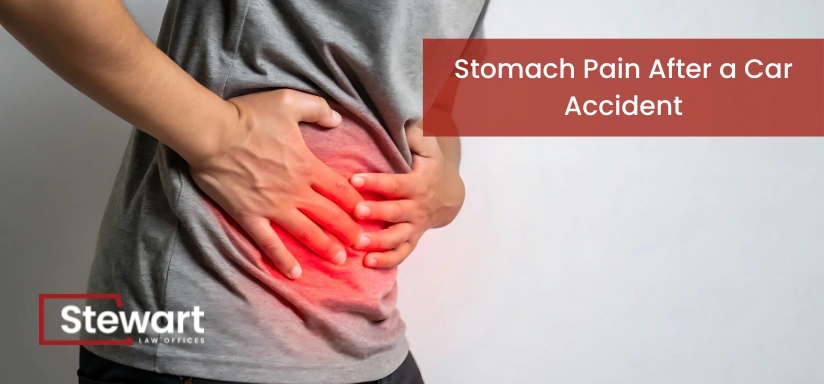
Stomach pain after a car accident can be easy to overlook, especially when your injuries don’t appear right away. However, abdominal pain after a crash is never something to ignore. It can signal internal bleeding, organ damage, or other serious complications that may not surface until hours or days later.
Whether the discomfort feels mild or severe, getting immediate medical attention can make all the difference for your recovery and your potential legal claim.
Why You Should Never Ignore Stomach Pain After a Car Accident
After a collision, your body releases adrenaline, which can mask pain for hours. That’s why some victims only notice abdominal soreness long after the accident. But even minor stomach pain can be a warning sign of something serious.
Internal injuries are among the leading causes of preventable trauma-related deaths in the U.S. after crashes. Ignoring abdominal pain can allow internal bleeding or organ damage to worsen, leading to life-threatening complications.
Some of the most dangerous conditions associated with post-accident stomach pain include:
- Internal bleeding from damaged blood vessels or organs.
- Organ injury, such as trauma to the liver, spleen, or kidneys.
- Seat belt syndrome, where the seat belt causes bruising or tearing of abdominal tissue during impact.
- Soft-tissue inflammation or bruising of the abdominal wall.
Getting prompt medical evaluation, often including imaging like CT scans or ultrasounds, can identify these issues before they become fatal.
Common Causes and Warning Signs of Abdominal Pain After a Car Accident
Abdominal pain can have multiple sources depending on how your body moved during impact. The most common causes include:
- Seat Belt Force: While seat belts save lives, the force they exert in a high-impact collision can injure soft tissue or organs underneath.
- Airbag Deployment: Airbags can cause blunt-force trauma to the abdomen, leading to bruising or internal swelling.
- Steering Wheel or Dashboard Impact: Drivers and front-seat passengers are especially vulnerable when their torso hits the wheel or dashboard.
- Whiplash or Sudden Jerk Movements: Rapid twisting or bending of the torso can strain abdominal muscles or organs.
Warning signs that you may have a serious abdominal injury include:
- Persistent or worsening stomach pain.
- Swelling, tenderness, or bruising across the midsection.
- Nausea, vomiting, or dizziness.
- Fainting or rapid heartbeat.
- Blood in the urine or stool.
If you experience any of these symptoms, seek medical care immediately. Even small tears or internal bruising can become critical if left untreated.
Diagnosing and Treating Stomach or Abdominal Injuries After a Crash
Doctors often use a combination of physical exams, blood tests, and imaging scans to diagnose abdominal injuries. Common diagnostic tools include CT scans, X-rays, and ultrasounds that can detect internal bleeding, organ rupture, or fluid buildup.
Treatment will depend on the diagnosis:
- Mild injuries, such as muscle strains or bruising, may only require rest and monitoring.
- Moderate injuries could involve observation and medications to manage swelling and pain.
- Severe cases, such as internal bleeding or organ lacerations, often need emergency surgery to prevent further damage.
Early diagnosis not only protects your health but also strengthens your legal claim by documenting the injury’s connection to the accident.
How Abdominal Injuries Can Impact Your Car Accident Claim in South Carolina
In South Carolina, accident victims may recover compensation for medical expenses, lost wages, pain and suffering, and future care needs. However, proving that your abdominal injury resulted directly from the crash requires solid medical evidence.
Your attorney will use:
- Emergency room and diagnostic reports
- Imaging results (CT scans, X-rays, ultrasound findings)
- Physician statements and treatment timelines
- Documentation of ongoing pain or complications
South Carolina follows a comparative negligence system, which means your compensation can be reduced by your percentage of fault, and barred entirely if you are 51% or more at fault. Working with an experienced attorney helps ensure your medical records and expert opinions clearly link your injury to the accident, preventing insurers from minimizing your claim.
Preventing Abdominal Injuries in Future Car Accidents
While not every collision is preventable, taking basic safety steps can greatly reduce your risk of abdominal trauma:
- Always wear your seat belt correctly; position it across your hips, not your stomach.
- Adjust your seat and steering wheel to maintain a safe distance from the airbag.
- Avoid distracted or impaired driving.
- Keep your airbags and seat belts in proper working condition.
According to the National Highway Traffic Safety Administration (NHTSA), wearing a seat belt properly reduces the risk of moderate to critical injury by about 50% in passenger vehicles and up to 65% in light trucks. Proper use is essential; misuse can significantly reduce effectiveness and increase the risk of harm.
Get Legal Help for Stomach Pain and Abdominal Injuries After a Car Accident in South Carolina
If you’re suffering from stomach pain after a car accident, don’t wait to get medical help and legal guidance. Abdominal injuries can be complex, costly, and easy to overlook—but you don’t have to face them alone.
An experienced South Carolina car accident lawyer can help you protect your health, document your injuries, and pursue full compensation for your losses. Contact Stewart Law Offices today for a free consultation and let our team help you get the justice and recovery you deserve.