
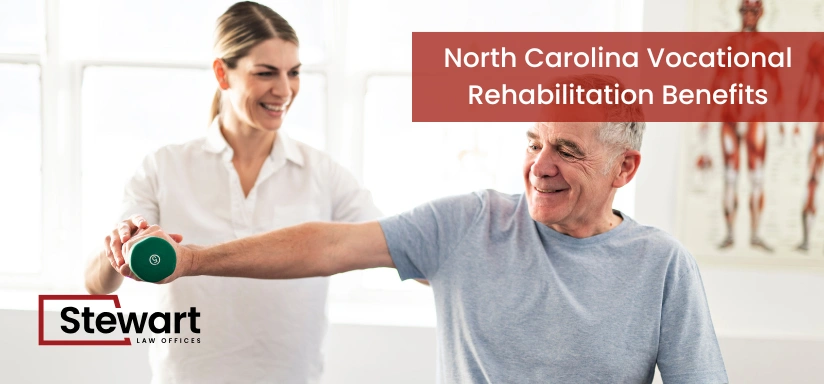
When a serious workplace injury leaves you unable to do your old job, it can feel like your career has hit a dead end. But North Carolina’s workers’ compensation system includes vocational rehabilitation benefits designed to help injured workers retrain for new careers and get back to earning a living. These services can make the difference between struggling financially and building a sustainable future after an injury.
If you’re facing permanent work restrictions and wondering what comes next, understanding how vocational rehabilitation works is the first step toward regaining your independence.
What Types of Work Injuries or Illnesses May Require Vocational Rehabilitation?
Vocational rehabilitation provides specialized services to help injured workers who cannot return to their previous jobs find suitable new employment. This includes training or education to develop skills for alternative roles, with the main goal of enabling them to re-enter the workforce at comparable pre-injury wages.
Vocational rehabilitation is most often used when an injury causes permanent or long-term work restrictions. Common examples include:
- Serious back or spinal injuries that limit lifting, standing, or bending
- Traumatic brain injuries affecting concentration or memory
- Repetitive stress injuries that prevent manual labor
- Occupational diseases that restrict exposure to certain environments
- Injuries resulting in permanent partial disability ratings
If a treating physician determines that you cannot safely perform your pre-injury job, vocational rehabilitation may become part of your workers’ compensation claim.
According to the U.S. Bureau of Labor Statistics, North Carolina employers reported 68,600 nonfatal workplace injuries and illnesses in 2023, with 40,900 cases severe enough to require days away from work, job transfer, or work restrictions. Many of these injured workers may need vocational rehabilitation to return to productive employment.
What Workers’ Compensation Benefits Are Available in North Carolina?
North Carolina’s workers’ compensation program offers four primary categories of benefits: medical care, compensation for lost wages (disability benefits), support for returning to work (vocational rehabilitation), and financial assistance for dependents (death benefits).
Specifically, vocational rehabilitation services are comprehensive and designed to help injured workers return to suitable employment. These services encompass:
- Assessment and Evaluation: Vocational evaluations to determine work history and physical capabilities; skills and psychological assessments; and a transferable skills analysis.
- Career Planning: Career exploration to identify appropriate new occupations, labor market surveys to research job opportunities, and professional counseling and guidance.
- Training and Education: Specialized training programs tailored to individual limitations, hands-on job training, and educational programs available through North Carolina community colleges or universities.
- Job Search and Placement: Employment development and job placement assistance, job search training including resume writing and interview preparation, and adjustment counseling to facilitate adaptation to new roles.
- Workplace Support: Workplace modifications to accommodate physical restrictions.
What’s Involved in a Vocational Rehabilitation Assessment?
Everything starts with a detailed evaluation by a certified rehabilitation specialist. This includes reviewing your medical records and restrictions, discussing your work history, education, and goals, and conducting interviews or tests to gauge strengths.
From there, the professional drafts an individualized plan outlining recommended steps, timelines, and expected outcomes. Plans prioritize returning to your current employer if possible, then new employment, or finally formal training. You receive a copy, and adjustments can happen by mutual agreement or Commission order.
Who Is Eligible for Vocational Rehabilitation in North Carolina?
You may qualify if your accepted injury prevents full return to prior duties and you either remain out of work or earn less than 75% of your previous average weekly wage in a modified role. This threshold helps identify cases where support could meaningfully improve wage-earning capacity, per N.C. Gen. Stat. § 97-32.2.
Services are not mandatory for total permanent disability cases but remain available in many partial disability scenarios.
Who Can Request Vocational Training?
Both employers and employees can initiate vocational rehabilitation. An employer can request these services at any stage of a compensable claim as long as you haven’t been determined totally disabled. This can happen even before you reach maximum medical improvement and may include a vocational capabilities assessment.
As an employee, you can request vocational rehabilitation if you haven’t resumed work or if you’ve returned to work but earn less than 75 percent of your average weekly wages while on partial disability benefits.
What If My Employer Refuses My Request for Vocational Rehab?
If your employer refuses your request for vocational rehabilitation, you’re not without options. You can file a formal request with the North Carolina Industrial Commission. The Commission will review your case and can order your employer to provide services if it determines that vocational rehabilitation would likely enhance your wage-earning capacity.
Disputes and Challenges With Vocational Rehabilitation Plans
Common disputes include:
- Disagreements over suitable job options
- Concerns about training quality or relevance
- Conflicts between medical restrictions and proposed work
- Employer or insurer pressure to accept low-paying jobs
If disputes arise, the Industrial Commission can review and adjust plans. Legal representation is often necessary to ensure fairness.
How Vocational Rehabilitation Can Impact Your Return to Work and Earning Capacity
Successful participation often speeds reemployment in roles matching your post-injury abilities, preserving or restoring income levels. It demonstrates a good-faith effort, which can strengthen ongoing benefit claims or settlement positions.
Overall, these services empower long-term stability, turning limitations into new opportunities while protecting your rights under the system.
Get Help from a Knowledgeable Work Injury Attorney
Dealing with vocational rehabilitation adds complexity to an already stressful recovery. Your rehabilitation plan must be fair, professional, and managed by qualified experts who respect your input.The team at Stewart Law Offices is dedicated to guiding injured workers across the state, and our North Carolina workers’ compensation lawyers handle assessments, disputes, and benefit maximization with care.
If restrictions threaten your career, reach out for a free review. Call 866-783-9278 or contact us online. We stand ready to protect your future.