
Lexington Distracted Driving Accident Lawyer
Legally Reviewed by Stephen Vicari: July 01, 2026
A distracted driver can change your life in a split second. One moment you are driving along Sunset Boulevard, I‑20, or a neighborhood street in Lexington, and the next you are hit by someone who never even saw you because they were looking at a phone, fiddling with the radio, or focused on something other than the road. These crashes are preventable, and when distraction is involved, you should not be left to shoulder the medical bills, lost wages, and pain on your own.
 If a distracted driver has hurt you or someone in your family anywhere in Lexington County, Stewart Law Offices is here to help. Stephen Vicari, a licensed South Carolina Bar attorney with more than a decade of experience representing injured clients throughout Lexington County, brings that standard to every case he handles, whether it settles in three months or goes to trial in three years. When you walk through our doors, you are not a file number. You are a person dealing with real consequences caused by someone else, and you deserve real answers, real attention, and a real fight.
We guide you through every option available to you, from vehicle repairs and medical bills to the harder-to-quantify costs of pain, disrupted sleep, and days your life did not move forward the way it should have. You pay nothing unless we win.
Distracted Driving Accidents in Lexington, SC
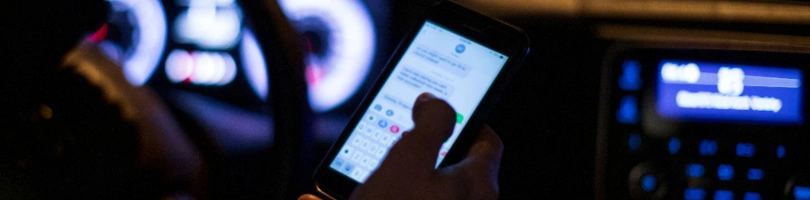
Distracted driving occurs when a driver’s attention is diverted from the road. Distractions can be visual, manual, or cognitive, and include:
- Texting or using a smartphone
- Adjusting GPS or music systems
- Eating or drinking while driving
- Talking to passengers
- Daydreaming or mental distraction
Distracted driving is one of the leading causes of preventable crashes nationwide. NHTSA’s latest research note reports that in 2023, there were 3,275 people killed and an estimated 324,819 people injured in motor vehicle crashes involving distracted drivers across the United States. That means about 8 percent of all traffic fatalities, 3,021 fatal crashes, involved distraction, and 5 percent of all drivers in fatal crashes were reported as distracted at the time of the collision.
According to a comprehensive 2023 review of hands-free legislation, distracted driving contributed to 18,936 collisions in South Carolina between 2017 and 2021. This data highlights a concerning trend in the state, with an average of 2 crashes per hour due to driver distraction.
In Lexington County alone, recent reports show more than 8,000 traffic collisions in 2023, with dangerous intersections like U.S. 378 at I‑20, Augusta Highway at Old Orangeburg Road, and U.S. 1 near I‑20 topping the list for crash frequency. A Lexington distracted driving accident lawyer uses this kind of data to explain that your crash did not happen in a vacuum; it is part of a documented pattern of distraction‑related danger on local roads.
Understanding Distracted Driving Laws in South Carolina
Understanding the legal framework that governs distracted driving in South Carolina is essential when building a strong injury claim, as a violation of the law can serve as powerful evidence of negligence.
Previous Law (Texting Ban)
South Carolina previously prohibited drivers from reading, writing, or sending text messages while operating a vehicle under S.C. Code § 56-5-3890. This was a primary offense, but it had significant gaps regarding other phone uses.
The New Hands-Free and Distracted Driving Act
South Carolina’s Hands-Free and Distracted Driving Act significantly expanded the restrictions on mobile device use while driving. Under the new law, drivers are prohibited from:
- Holding or supporting a mobile electronic device with any part of their body
- Using a mobile device to read, compose, or transmit texts, emails, app interactions, or website information
- Watching any motion content (including videos, movies, or video calls) on a mobile device
The law permits hands-free use, including Bluetooth, speakerphone (without holding the device), voice commands, earpieces, and wrist-worn devices for voice communication. Exceptions also exist for drivers who are lawfully parked or stopped, using navigation or audio content without holding the device, reporting an emergency, or for law enforcement and emergency personnel performing official duties.
For the first 180 days (September 1, 2025 – February 28, 2026), police issued warnings only. Beginning March 1, 2026, full enforcement took effect:
- First offense: $100 fine
- Second or later offense (within 3 years): $200 fine + 2 points on your driving record
This law is designed to reduce distraction‑related crashes and keep South Carolina roads safer.
Why This Matters for Your Civil Claim
A violation of South Carolina’s distracted driving law can help establish negligence per se in a civil case. This means the statutory violation itself can serve as evidence that the driver breached their duty of care. However, you must still prove that the distraction caused or contributed to the crash.
Who Is Liable for a Distracted Driving Accident in Lexington?
The at-fault driver is the primary defendant in most Lexington distracted driving accident cases, but liability does not always end there. Depending on the circumstances, other parties may share responsibility.
The Distracted Driver
Every driver in South Carolina owes a legal duty of care to other road users. Operating a vehicle while distracted, whether by a phone, food, or any other activity, breaches that duty. When that breach causes a crash, the driver is liable for all resulting harm. A violation of the Hands-Free Act strengthens the case by establishing negligence per se, though liability can also be established without a citation.
The Driver’s Employer
If an at-fault driver was working at the time of the crash, such as a delivery, commercial, or field service driver, their employer may be vicariously liable. Companies may also face direct liability for failing to enforce distracted-driving policies or providing devices without requiring hands-free use. Because commercial entities typically hold much larger insurance policies than individuals, investigating employer liability is a vital step in these cases.
Vehicle or Device Manufacturers
In cases where a defective vehicle system, an infotainment screen that inappropriately commands driver input, a navigation system that malfunctions and causes a driver to look away contributed to the distraction, a product liability claim against the manufacturer may be available alongside the negligence claim against the driver.
Challenges in Proving Distracted Driving Claims in South Carolina
While distracted driving cases may seem simple, they are often complicated by at-fault drivers and insurers who rarely admit liability.
Insurance companies defending distracted driving claims use several common strategies. They may argue that the driver was not actually distracted, suggest another cause for the crash, dispute the severity of your injuries, or claim that you share some percentage of fault. Because South Carolina follows a modified comparative negligence system, if you are found to be 51% or more at fault, you can recover nothing.
Proving distracted driving is complex because at-fault drivers often deny phone use, and insurance companies frequently utilize these denials to dispute claims. These cases require specialized legal representation to overcome evidentiary hurdles, such as securing phone records from wireless carriers or obtaining surveillance footage and witness statements before they are lost or deleted.
An experienced Lexington car accident attorney can begin the investigation immediately, preserve key evidence, and build a strong case to hold the negligent driver accountable.
What to Do After a Distracted Driving Accident in Lexington
The steps you take in the hours following a distracted driving crash directly affect the evidence available to support your claim and the strength of the legal case that can ultimately be built on your behalf.
- Call 911 immediately. Police response provides the official collision report essential to your claim. This creates a record of scene conditions, the involved parties, and the officer’s observations regarding driver behavior. If you suspect distraction, inform the officer if you saw the driver using a phone, eating, or otherwise failing to pay attention.
- Do not move vehicles before documentation. If the vehicles can remain in their post-crash positions without creating a secondary hazard, leave them until law enforcement arrives and documents their positions. The final resting positions of vehicles relative to lane markings can be important evidence of crash dynamics.
- Photograph everything you can. All vehicles from multiple angles, damage patterns, road conditions and markings, traffic signals and signage, skid marks or their absence, and your visible injuries. Note the time of day, lighting conditions, and weather. If you observe a phone in the other driver’s hand or on their lap, photograph it from a safe distance, if possible.
- Note observations about the other driver’s behavior. If you saw the other driver looking at their phone before the crash, note this as specifically as possible: what they appeared to be doing, at what point before impact you noticed, and whether they reacted at all before the collision. This contemporaneous observation, documented promptly, is valuable evidence.
- Collect information without discussing fault. Get the other driver’s name, license, insurance information, and vehicle details. Collect witness contact information. Do not apologize, discuss fault, or speculate about the cause of the crash with anyone at the scene.
- Seek medical evaluation without delay. Accept evaluation from responding EMS and follow up with your own physician or an urgent care facility the same day, even if you feel well initially. Soft tissue injuries, concussions, and internal trauma frequently produce delayed symptoms, and a gap in medical treatment will be used by the insurance company to minimize your claim.
- Contact a Lexington distracted driving accident lawyer. The at-fault driver’s insurer may contact you quickly, sometimes the same day. You are not required to give a recorded statement to the other driver’s insurer, and doing so almost always damages your claim. Speak with an attorney first.
Compensation Available in a Lexington Distracted Driving Accident Case
South Carolina law allows victims of distracted driving accidents to pursue full compensation for all losses caused by the crash.
Economic Damages
These are your measurable financial losses and may include:
- All medical expenses (emergency care, hospitalization, surgery, therapy, medications, and future medical needs)
- Lost wages during recovery
- Reduced earning capacity if your injuries affect your ability to work in the future
Non-Economic Damages
These compensate for the human impact of the injury and include:
- Physical pain and suffering
- Emotional distress and anxiety
- Loss of enjoyment of life
- Permanent disability or disfigurement
South Carolina does not impose a cap on non-economic damages in standard personal injury cases, such as distracted-driving accidents.
Punitive Damages
If the at-fault driver’s conduct was especially reckless (for example, texting while driving after prior citations or watching videos while operating the vehicle), you may also seek punitive damages. These are intended to punish egregious behavior and deter similar conduct. They are available only upon proof of willful, wanton, or reckless conduct by clear and convincing evidence.
The Statute of Limitations for Distracted Driving Claims in Lexington, SC
South Carolina law imposes strict deadlines on your ability to pursue a distracted driving injury claim. Missing these deadlines can permanently eliminate your right to compensation, regardless of how clear the liability is or how serious your injuries are.
Under South Carolina Code § 15-3-530, the standard personal injury statute of limitations is three years from the date of the accident. Wrongful death claims carry the same three-year window running from the date of death. Claims against a government entity, for example, if a malfunctioning traffic signal or a defective road condition contributed to the crash, are subject to shorter notice requirements under the South Carolina Tort Claims Act, with written notice sometimes required within one to two years and specific procedural steps that must be followed precisely.
Visit Our Lexington Distracted Driving Accident Lawyers in Lexington, SC
How Stewart Law Offices Handles Your Distracted Driving Case
From the moment you retain us, our team takes full ownership of your case. We immediately send preservation letters to the at-fault driver’s wireless carrier and to any businesses or traffic systems that may have captured relevant footage. We obtain and review the collision report, then evaluate its accuracy. We contact and interview witnesses. We prepare and serve the discovery necessary to obtain the driver’s phone records.
We document your injuries thoroughly, working with your medical providers to build a complete record of your condition, current and future, that supports the full value of your economic damages. We evaluate every potential defendant, including the at-fault driver’s employer if applicable, as part of your Lexington personal injury claim. We handle all communications with insurance companies so that you are never pressured into a recorded statement or a premature settlement.
When we have built the complete picture of what happened and what it has cost you, we engage the insurance company with a comprehensive demand backed by evidence. If the insurer negotiates fairly, we resolve your case efficiently. If they do not, we are fully prepared to file suit and take your case before a Lexington County jury.
Get Help From a Lexington Distracted Driving Accident Lawyer
When a distracted driver turns your life upside down, you should not have to sort out medical bills, lost income, and confusing insurance questions on your own. A Lexington distracted driving accident lawyer at Stewart Law Offices can step in, take over the legal and insurance issues, and help you focus on getting better instead of fighting adjusters.
Frequently Asked Questions About Lexington Distracted Driving Accident Claims
Yes. South Carolina’s distracted driving law and civil negligence principles extend beyond phone use to any activity that diverts attention from safe driving. A driver who is programming a GPS destination while moving, adjusting a complex infotainment interface, or watching content through an in-vehicle screen has still breached the duty of care owed to other road users. The specific evidence strategy differs from that in phone-record cases; we focus on vehicle EDR data, camera footage, and witness observations, but the legal claim and available compensation remain the same.
Yes, potentially. South Carolina’s modified comparative fault rule allows recovery as long as your percentage of fault does not exceed 50 percent. Your compensation is reduced proportionally by your share of fault, but you are not entirely barred from recovery. If the other driver was primarily distracted and you were comparatively less so, you retain the right to pursue compensation for the share of your damages attributable to their negligence. Our attorneys work to accurately characterize the relative fault of each party using objective evidence, countering any attempt by the insurance company to inflate your share of responsibility.
Nothing. Stewart Law Offices handles distracted driving accident cases on a strict contingency fee basis; you pay no attorney fees and no case costs unless and until we secure compensation for you. If we do not recover, you owe us nothing. Your initial consultation is completely free and carries no obligation. There is no financial risk in contacting us to learn about your legal options, regardless of your current financial situation.