
As the vibrant hues of autumn paint the South Carolina landscape, many of us eagerly anticipate the joys of cooler weather, pumpkin-spiced delights, and the rustle of fallen leaves. But with the changing season comes a shift in driving conditions that catches many motorists off-guard, increasing the risk of collisions.
Recent data reveals that autumn is the most dangerous season for car accidents in 72% of U.S. states, affecting over 170 million drivers nationwide. South Carolina is among these high-risk states where fall driving conditions create hazards that many drivers fail to anticipate. Here are some common excuses local drivers use when they get into Autumn accidents.
I Couldn’t See Because of Glare from the Sun
Drivers involved in a car accident might claim that they couldn’t see due to glare from the sun, especially during autumn when the sun is lower in the sky during peak driving times. This excuse, while common, does not absolve a driver of responsibility for an accident.
It is a driver’s responsibility to adapt to road conditions and ensure they are driving safely. This includes taking preventative measures against sun glare, such as wearing sunglasses, using vehicle sun visors, or adjusting driving speeds and following distances to accommodate reduced visibility. If drivers fail to take these necessary precautions and cause an accident, they can still be liable.
Drivers must maintain an “assured clear distance ahead,” meaning you must be able to stop within the visible distance. Courts consistently rule that sun glare is not a valid legal defense because it is foreseeable, and drivers are expected to anticipate that sunlight might affect their vision and adjust their behavior accordingly.
The Wet Leaves Made the Road Slippery
During the autumn months in South Carolina, many roads are covered with wet leaves. After an accident, some drivers might argue that wet leaves made the road so slippery that they couldn’t avoid the crash.
However, this excuse does not clear a driver of responsibility. Under South Carolina traffic laws, drivers must drive at a speed that is “reasonable and prudent” given the conditions. The law explicitly states that this includes considering existing and potential road hazards. So, even if wet leaves make the road slippery, the driver must still recognize these conditions and slow down as necessary.
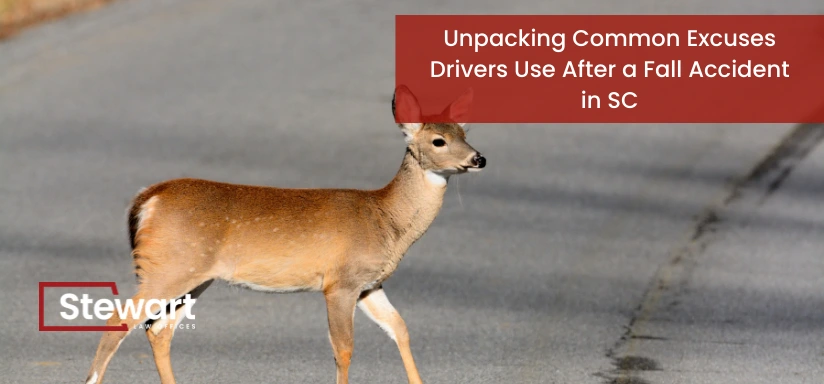
I Was Dodging a Deer
South Carolina, with its vast rural landscapes and dense forests, experiences a spike in deer activity during the fall months. This is primarily due to the deer mating season known as the rut, which usually peaks in October and continues through November and December. During this season, some drivers might claim they got into accidents while trying to dodge deer that suddenly darted onto the road.
While the presence of deer is a legitimate hazard in some scenarios, the validity of this excuse can vary based on the situation. If a driver is maintaining a safe speed, staying alert, and paying close attention to road conditions, their sudden maneuver to avoid a deer could be a reasonable reaction. But if a driver is speeding, distracted, or breaking traffic rules, their claim of “dodging a deer” might not hold water.
I Couldn’t See Through the Fog
Fog can drastically reduce visibility on roads. Some drivers might claim they couldn’t see through the fog as an explanation for an accident, particularly during early mornings or late evenings in autumn.
Federal Highway Administration data reveal that over 38,700 traffic accidents occur in fog each year in the United States, resulting in more than 600 deaths and over 16,300 injuries annually. These sobering statistics demonstrate that fog is one of the most dangerous weather conditions for drivers.
South Carolina law, however, expects drivers to exercise additional caution in foggy conditions. Like sun glare, fog is a hazardous condition requiring slower speeds and extra caution. The law also requires illuminated headlights when environmental factors reduce visibility. Specifically, drivers should use low-beam headlights, not high beams, as high beams cause glare and can actually worsen visibility by reflecting off the fog. Blaming the fog does not absolve a driver from the responsibility of adapting to road conditions and ensuring safety.
Safety experts recommend that the best action when dense fog sets in is to wait it out if possible. If you must drive, reduce your speed significantly to allow for increased reaction time, leave extra space between your vehicle and the one in front of you to account for reduced visibility, and stay in your lane rather than attempting to pass other vehicles.
Why Autumn is America’s Most Dangerous Driving Season
Understanding why fall is so hazardous helps drivers recognize the full scope of risks they face during these months:
Reduced Daylight Hours
As daylight saving time ends in November, more drivers find themselves commuting in darkness. Drivers are twice as likely to be involved in an accident at night as during the day, and half of all U.S. accidents happen in the dark, despite those hours accounting for just 25% of travel. This reduced visibility makes it harder to see road signs, pedestrians, obstacles, and wildlife.
Seasonal Weather Transitions
Autumn brings abrupt temperature swings that create unexpected hazards. Early morning dew and fog can suddenly appear, wet leaves accumulate on roadways, and light frost can develop on shaded areas and bridges. Unlike winter, when drivers mentally prepare for harsh conditions, autumn’s dangers are often underestimated, and many drivers fail to adjust their behavior quickly enough.
Increased Wildlife Activity
October through December marks not only deer mating season but also migration periods for various wildlife species. Animals are more active and unpredictable during these months, with peak activity occurring precisely during rush hour traffic.
The Daylight Saving Time Factor
Research analyzing 20 years of data found approximately a 6% increase in fatal crashes during the workweek following daylight saving time transitions. The fall “fall back” shift changes crash patterns by altering when dawn and dusk occur relative to typical driving times, affecting driver alertness and visibility conditions.
Hurt in a Car Accident in Autumn? Contact Us Now.
If you get into a car accident with a driver who uses one of these fall-time excuses, don’t take it at face value. You could be entitled to compensation from the other driver, despite their excuse. A knowledgeable car accident lawyer in South Carolina at Stewart Law Offices can help you seek compensation. Contact our firm now to learn more in a free consultation.